What Happens to Players’ Jerseys After Football Matches?
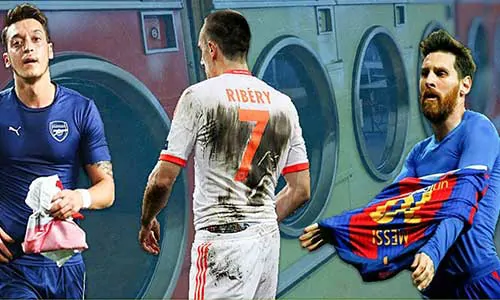
Table of Contents
- 1. Introduction
- 2. Behind the Scenes: The Role of the Kit Management Team
- 3. The Tradition of Shirt Swapping
- 4. What Happens to Players’ Jerseys After Football Matches when Donated to Charity?
- 5. The Commercial Memorabilia and Fan Market
- 6. What Happens to Players’ Jerseys After Football Matches in Lower Leagues?
- 7. What Happens to Players’ Jerseys After Football Matches when Milestones are Reached?
- 8. Washing, Recycling, and Environmental Sustainability
- 9. Quick Reference: Where Do Match-Worn Jerseys Go?
- 10. Conclusion
- 11. Frequently Asked Questions
When the final whistle blows and tens of thousands of fans head home, the pitch undergoes a quiet transformation. Amidst the post-game analysis and celebrations, a common question arises among football enthusiasts: What Happens to Players’ Jerseys After Football Matches? While we often see players swap shirts on live television, this represents only a small fraction of the complex lifecycle of a professional football kit.
In the modern sporting era, a football shirt is no longer just a piece of athletic wear. Instead, it serves as a valuable collectible, a historical artifact, a tool for charitable fundraising, and sometimes even a recycled resource. Consequently, managing these garments requires meticulous planning, dedicated staff, and sophisticated logistics.
In this comprehensive guide, we will explore the diverse paths a match-worn jersey takes once the players leave the pitch. From elite Premier League encounters to the resource-conscious lower divisions, we examine the logistics, traditions, and financial realities behind these iconic garments.
Behind the Scenes: The Role of the Kit Management Team
To understand the journey of a football jersey, one must first look at the preparation that occurs before the match even begins. Every elite professional club employs a dedicated kit management team, led by a head kit manager. This team is responsible for organizing, transporting, and preparing all technical gear for the squad.
For a standard fixture, a kit manager does not simply pack one shirt per player. In fact, they typically prepare a minimum of three identical jerseys for every single squad member selected for the matchday team sheet.
These three shirts serve distinct purposes:
- First Half Shirt: The primary jersey worn by the player from kick-off until the half-time break.
- Second Half Shirt: A fresh, dry jersey waiting in the dressing room. Players often prefer to change at half-time to maintain comfort, especially during rainy or humid conditions.
- Emergency Spare Shirt: An extra jersey kept on hand in case the active shirt is torn, damaged, or heavily bloodstained during play, which requires an immediate change under refereeing guidelines.
Additionally, if a player suffers a cut, the referee will not allow them to continue playing wearing a shirt with visible blood. Therefore, having clean, pre-printed backups readily available on the sidelines is a regulatory necessity.
The Tradition of Shirt Swapping
One of the most visible answers to our main question is the time-honored tradition of shirt swapping. At the end of many high-profile games, opponents approach one another to exchange shirts as a gesture of mutual respect, sportsmanship, and camaraderie.
This practice has deep historical roots. The first recorded instance of a post-match shirt swap occurred in 1931, following a match between France and England. The French players, thrilled with their historic victory, requested the English players’ shirts as souvenirs. Over the decades, this gesture evolved into a regular ritual, especially at international tournaments like the FIFA World Cup.
For more insights on historical football regulations and traditions, you can visit the official FIFA Official Website, which documents the evolution of international matchday protocols.
In contemporary football, players often negotiate these swaps ahead of time, particularly when facing legendary figures such as Lionel Messi or Cristiano Ronaldo. Consequently, young players frequently head straight to their idols at the final whistle to secure a highly coveted souvenir for their personal collections.
What Happens to Players’ Jerseys After Football Matches when Donated to Charity?
In recent years, clubs have increasingly recognized the philanthropic value of match-worn apparel. As a result, many jerseys are collected directly from the dressing room to be auctioned for charitable causes.
To maximize their authenticity and value, these jerseys are often left unwashed. Fans and collectors are willing to pay significant premiums for shirts that still bear grass stains, mud, and sweat marks from the pitch, as these physical imperfections serve as proof of their matchday usage.
The process generally works as follows:
- Immediately after the game, the kit manager collects the dirty jerseys worn during the ninety minutes.
- The shirts are carefully placed in sealed bags to preserve their “as-worn” state and prevent contamination.
- The club signs certificates of authenticity to verify which player wore the specific shirt and during which match.
- The items are sent to specialized auction platforms where fans bid on them worldwide.
The funds generated from these auctions regularly go toward club foundations, local community outreach programs, or global humanitarian relief efforts. This practice turns a simple piece of sportswear into a powerful vehicle for social good.
The Commercial Memorabilia and Fan Market
Beyond charitable donations, the market for sports memorabilia is a multi-million dollar global industry. Elite clubs have established official partnerships with specialized online auction houses to streamline the distribution of match-worn shirts directly to collectors.
Platforms like MatchWornShirt have revolutionized this space. They coordinate with clubs across Europe, South America, and Asia to host auctions that launch the moment a game kicks off. This immediate connection allows fans to bid on the very shirts they are watching live on television.
Furthermore, technology plays an increasingly vital role in this industry. Many modern match-worn shirts now come equipped with digital authentication features, such as embedded RFID chips or unique holographic tags. These high-tech additions help combat counterfeiting, giving collectors confidence that their investment is genuine.
What Happens to Players’ Jerseys After Football Matches in Lower Leagues?
While elite clubs can easily afford to discard or give away dozens of shirts every single week, the financial reality is vastly different lower down the football pyramid. For clubs operating in semi-professional leagues or lower professional tiers, tight budgets demand strict resource management.
In these divisions, players do not have the luxury of giving away their shirts after every match. Instead, the jerseys are treated as reusable assets that must last for an entire season, or at least half of it.
To highlight the key differences between the top-flight leagues and the lower tiers, consider the following details:
- Strict Swapping Policies: In many lower-league clubs, players are strictly prohibited from swapping shirts with opponents unless they pay for the replacement shirt out of their own pockets.
- The Laundry Routine: Rather than being auctioned or gifted, the shirts are collected by the kit manager, thoroughly washed on-site, dried, repaired if necessary, and carefully hung back up for the next fixture.
- Sponsor Commitments: Because printing new sponsor logos and names on replacement shirts is both costly and time-consuming, keeping the existing inventory in pristine condition remains a priority.
Thus, while a Premier League superstar might use over a hundred shirts in a single campaign, a League Two player might rely on just three or four home shirts to carry them through dozens of competitive matches.
What Happens to Players’ Jerseys After Football Matches when Milestones are Reached?
Some matches carry extraordinary historical or personal significance. When a player scores a hat-trick, makes their professional debut, plays their final game before retirement, or wins a major trophy, their matchday jersey becomes an irreplaceable keepsake.
In these special circumstances, players almost always choose to keep their shirts. They take them home to preserve them as personal mementos of their achievements on the pitch.
Many elite athletes have custom-designed rooms or private museums in their homes dedicated to displaying their personal achievements and the shirts they swapped with legendary opponents. For example, Lionel Messi has famously shared photographs of his extensive shirt collection, which features jerseys from some of the game’s greatest players displayed across walls and glass flooring.
Furthermore, when a player achieves a notable milestone, teammates often sign the match jersey in fabric marker in the dressing room, transforming the garment into a collaborative piece of club history.
Washing, Recycling, and Environmental Sustainability
What about the shirts that are neither swapped, auctioned, nor kept? For standard, non-milestone fixtures, many clubs wash and reuse shirts for several consecutive matches to minimize waste and manage operational costs.
Professional kit rooms are equipped with industrial-grade washing machines and specialized detergents designed to remove stubborn grass, mud, and sweat stains without damaging the delicate, breathable fabrics or peeling off heat-pressed vinyl names, numbers, and sponsor logos.
To learn more about the broader sports apparel industry and how manufacturers are working toward sustainable athletic wear, you can check out coverage on BBC Sport, which frequently reports on environmental initiatives undertaken by major clubs and sportswear brands.
Additionally, modern sportswear brands are heavily focusing on sustainability. Many of today’s football kits are manufactured using 100% recycled polyester, often sourced from recycled plastic bottles. When these jerseys eventually reach the end of their usable lifecycles due to wear and tear, some clubs partner with textile recycling initiatives to ensure the materials are repurposed rather than sent to landfills.
Quick Reference: Where Do Match-Worn Jerseys Go?
To summarize, the ultimate destination of a professional football shirt depends heavily on the level of competition, the significance of the match, and individual player choices. The table below outlines the most common pathways:
| Destination | Primary Purpose | Commonly Seen In |
|---|---|---|
| Opponent Exchange | Mutual respect and sportsmanship | Elite Leagues & International Tournaments |
| Charity Auctions | Raising funds for foundations & community work | Top-tier European Clubs |
| Personal Keepsake | Commemorating debuts, hat-tricks, and trophies | All levels of football |
| Laundered & Reused | Cost-saving and inventory management | Lower Leagues & Semi-Pro divisions |
| Gifted to Fans | Fan engagement and appreciation | Post-match stadium celebrations |
Conclusion
In conclusion, there is no single answer to the question of what happens to a player’s jersey once the match ends. Instead, these garments embark on diverse journeys depending on the tier of the club, the significance of the game, and the traditions of the sport.
Whether they are framed in a player’s private residence, auctioned to raise thousands of dollars for local charities, or simply washed and prepped by a dedicated kit manager for the next cold Tuesday night fixture, these shirts represent the physical connection between the athletes, the fans, and the history of the sport.
What do you think? If you had the chance to own a match-worn jersey from your favorite player, would you prefer it washed and pristine, or unwashed with real pitch stains? Let us know your thoughts in the comments section below, and share this article with your fellow football fans!
Frequently Asked Questions
Q1: Do football players pay for the jerseys they give away?
At elite-tier clubs, players are generally not billed for shirts they swap or gift to fans, as these expenses are covered by multi-million dollar technical sponsorships. However, in lower leagues, players often have a limited allowance and may be charged a fee if they exceed their allocated number of shirts for the season.
Q2: Why are some match-worn shirts sold unwashed?
Unwashed shirts are highly prized by collectors because the physical elements—such as grass stains, mud, scuff marks, and sweat—serve as authentic evidence of matchday action. Washing the shirt can actually lower its commercial value on the memorabilia market.
Q3: How many shirts does a professional player use per game?
In major leagues, the kit management team typically prepares three shirts per player per match: one for the first half, one for the second half, and a third backup jersey in case of damage or bloodstains.
Q4: What happens to the jerseys that are not swapped or auctioned?
If a jersey is not used for a swap, milestone keepsake, or charity auction, it is collected by the kit management staff, washed thoroughly using industrial laundry machines, and kept in inventory to be reused in future games.
Q5: Can fans buy actual match-worn jerseys directly from clubs?
Yes, many clubs partner with specialized sports memorabilia platforms to host official auctions. Through these authorized portals, fans can safely place bids on verified, authenticated shirts worn by their favorite players during actual matches.
Q6: How do clubs verify that a shirt was actually worn by a specific player?
Clubs verify authenticity by using unique tracking tags, signing certificates of authenticity immediately after the game, and sometimes utilizing embedded digital technologies like RFID chips or holographic stickers that cannot be easily replicated.