UEFA Champions League Winners List: Every Champion Since 1956
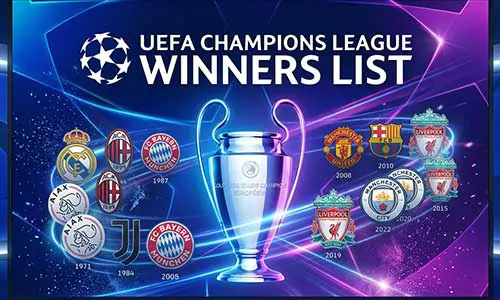
For decades, European club football has represented the absolute pinnacle of sporting drama, tactical innovation, and individual genius. If you are looking to trace the lineage of the continent’s greatest teams, exploring the definitive UEFA Champions League Winners List: Every Champion Since 1956 offers an unparalleled journey through sporting history. From the early dominance of Real Madrid in the mid-1950s to the ultra-competitive modern era, this tournament has crowned only the most elite clubs.
Consequently, understanding this historic timeline provides valuable insight into how football tactics, club structures, and eras of dominance have shifted over time. In this comprehensive guide, we provide a detailed overview of every single champion, analyze the most successful clubs, highlight historic eras, and answer the most frequently asked questions about European football royalty.
Table of Contents
- The Evolution of Europe’s Premier Club Competition
- UEFA Champions League Winners List: Every Champion Since 1956
- The Most Successful Clubs in Champions League History
- Analysing the UEFA Champions League Winners List: Every Champion Since 1956 by Era
- Dominance by Nation
- Frequently Asked Questions (FAQ)
The Evolution of Europe’s Premier Club Competition
Before diving into the complete records, it is essential to understand how this legendary tournament began. Established in 1955 as the European Champion Clubs’ Cup (commonly known as the European Cup), the tournament was initially a straightforward knockout competition. In those early days, only the domestic league champions of each country were invited to participate, along with the defending champion of the tournament.
However, the football landscape underwent a massive transformation in the 1992–1993 season. The tournament was rebranded as the UEFA Champions League, introducing a group stage format and, eventually, allowing multiple entrants from the strongest European leagues. This shift significantly increased the number of high-stakes matches, turning the competition into the global spectacle we watch today. To learn more about the official history and regulatory shifts of the tournament, you can explore the official UEFA Official Website.
Moreover, these structural changes altered how teams approached squad building. Winning the tournament now required not just a strong starting eleven, but a deep, world-class squad capable of managing both domestic league demands and grueling midweek European fixtures. Therefore, looking at the historical trajectory helps us appreciate just how difficult it is to lift the famous “Big Ears” trophy.
The Definitive UEFA Champions League Winners List: Every Champion Since 1956
Below is the complete chronological record of every European Cup and UEFA Champions League final played since the tournament’s inception in 1956. This structured overview displays the winner, the runner-up, and the final score for every season.
| Season | Winner | Score | Runner-up |
|---|---|---|---|
| 1955–56 | Real Madrid (ESP) | 4–3 | Reims (FRA) |
| 1956–57 | Real Madrid (ESP) | 2–0 | Fiorentina (ITA) |
| 1957–58 | Real Madrid (ESP) | 3–2 (aet) | Milan (ITA) |
| 1958–59 | Real Madrid (ESP) | 2–0 | Reims (FRA) |
| 1959–60 | Real Madrid (ESP) | 7–3 | Eintracht Frankfurt (GER) |
| 1960–61 | Benfica (POR) | 3–2 | Barcelona (ESP) |
| 1961–62 | Benfica (POR) | 5–3 | Real Madrid (ESP) |
| 1962–63 | Milan (ITA) | 2–1 | Benfica (POR) |
| 1963–64 | Inter Milan (ITA) | 3–1 | Real Madrid (ESP) |
| 1964–65 | Inter Milan (ITA) | 1–0 | Benfica (POR) |
| 1965–66 | Real Madrid (ESP) | 2–1 | Partizan (YUG) |
| 1966–67 | Celtic (SCO) | 2–1 | Inter Milan (ITA) |
| 1967–68 | Manchester United (ENG) | 4–1 (aet) | Benfica (POR) |
| 1968–69 | Milan (ITA) | 4–1 | Ajax (NED) |
| 1969–70 | Feyenoord (NED) | 2–1 (aet) | Celtic (SCO) |
| 1970–71 | Ajax (NED) | 2–0 | Panathinaikos (GRE) |
| 1971–72 | Ajax (NED) | 2–0 | Inter Milan (ITA) |
| 1972–73 | Ajax (NED) | 1–0 | Juventus (ITA) |
| 1973–74 | Bayern Munich (GER) | 4–0 (replay) | Atlético Madrid (ESP) |
| 1974–75 | Bayern Munich (GER) | 2–0 | Leeds United (ENG) |
| 1975–76 | Bayern Munich (GER) | 1–0 | Saint-Étienne (FRA) |
| 1976–77 | Liverpool (ENG) | 3–1 | Borussia Mönchengladbach (GER) |
| 1977–78 | Liverpool (ENG) | 1–0 | Club Brugge (BEL) |
| 1978–79 | Nottingham Forest (ENG) | 1–0 | Malmö FF (SWE) |
| 1979–80 | Nottingham Forest (ENG) | 1–0 | Hamburg (GER) |
| 1980–81 | Liverpool (ENG) | 1–0 | Real Madrid (ESP) |
| 1981–82 | Aston Villa (ENG) | 1–0 | Bayern Munich (GER) |
| 1982–83 | Hamburg (GER) | 1–0 | Juventus (ITA) |
| 1983–84 | Liverpool (ENG) | 1–1 (4–2 pens) | Roma (ITA) |
| 1984–85 | Juventus (ITA) | 1–0 | Liverpool (ENG) |
| 1985–86 | Steaua București (ROU) | 0–0 (2–0 pens) | Barcelona (ESP) |
| 1986–87 | Porto (POR) | 2–1 | Bayern Munich (GER) |
| 1987–88 | PSV Eindhoven (NED) | 0–0 (6–5 pens) | Benfica (POR) |
| 1988–89 | Milan (ITA) | 4–0 | Steaua București (ROU) |
| 1989–90 | Milan (ITA) | 1–0 | Benfica (POR) |
| 1990–91 | Red Star Belgrade (YUG) | 0–0 (5–3 pens) | Marseille (FRA) |
| 1991–92 | Barcelona (ESP) | 1–0 (aet) | Sampdoria (ITA) |
| Rebrand to UEFA Champions League Era | |||
| 1992–93 | Marseille (FRA) | 1–0 | Milan (ITA) |
| 1993–94 | Milan (ITA) | 4–0 | Barcelona (ESP) |
| 1994–95 | Ajax (NED) | 1–0 | Milan (ITA) |
| 1995–96 | Juventus (ITA) | 1–1 (4–2 pens) | Ajax (NED) |
| 1996–97 | Borussia Dortmund (GER) | 3–1 | Juventus (ITA) |
| 1997–98 | Real Madrid (ESP) | 1–0 | Juventus (ITA) |
| 1998–99 | Manchester United (ENG) | 2–1 | Bayern Munich (GER) |
| 1999–2000 | Real Madrid (ESP) | 3–0 | Valencia (ESP) |
| 2000–01 | Bayern Munich (GER) | 1–1 (5–4 pens) | Valencia (ESP) |
| 2001–02 | Real Madrid (ESP) | 2–1 | Bayer Leverkusen (GER) |
| 2002–03 | Milan (ITA) | 0–0 (3–2 pens) | Juventus (ITA) |
| 2003–04 | Porto (POR) | 3–0 | Monaco (FRA) |
| 2004–05 | Liverpool (ENG) | 3–3 (3–2 pens) | Milan (ITA) |
| 2005–06 | Barcelona (ESP) | 2–1 | Arsenal (ENG) |
| 2006–07 | Milan (ITA) | 2–1 | Liverpool (ENG) |
| 2007–08 | Manchester United (ENG) | 1–1 (6–5 pens) | Chelsea (ENG) |
| 2008–09 | Barcelona (ESP) | 2–0 | Manchester United (ENG) |
| 2009–10 | Inter Milan (ITA) | 2–0 | Bayern Munich (GER) |
| 2010–11 | Barcelona (ESP) | 3–1 | Manchester United (ENG) |
| 2011–12 | Chelsea (ENG) | 1–1 (4–3 pens) | Bayern Munich (GER) |
| 2012–13 | Bayern Munich (GER) | 2–1 | Borussia Dortmund (GER) |
| 2013–14 | Real Madrid (ESP) | 4–1 (aet) | Atlético Madrid (ESP) |
| 2014–15 | Barcelona (ESP) | 3–1 | Juventus (ITA) |
| 2015–16 | Real Madrid (ESP) | 1–1 (5–3 pens) | Atlético Madrid (ESP) |
| 2016–17 | Real Madrid (ESP) | 4–1 | Juventus (ITA) |
| 2017–18 | Real Madrid (ESP) | 3–1 | Liverpool (ENG) |
| 2018–19 | Liverpool (ENG) | 2–0 | Tottenham Hotspur (ENG) |
| 2019–20 | Bayern Munich (GER) | 1–0 | Paris Saint-Germain (FRA) |
| 2020–21 | Chelsea (ENG) | 1–0 | Manchester City (ENG) |
| 2021–22 | Real Madrid (ESP) | 1–0 | Liverpool (ENG) |
| 2022–23 | Manchester City (ENG) | 1–0 | Inter Milan (ITA) |
| 2023–24 | Real Madrid (ESP) | 2–0 | Borussia Dortmund (GER) |
The Most Successful Clubs in Champions League History
While looking through the complete UEFA Champions League Winners List: Every Champion Since 1956 shows a wide variety of winning clubs, a select few teams have built true empires in European football. These clubs have consistently found ways to replicate their success across different decades, personnel, and tactical eras.
Real Madrid: The Undisputed Kings
There is no discussion of European football without Real Madrid. With their 15th title secured in 2024, they hold more than double the trophies of their nearest rival. Historically, their dominance is split into two massive periods: the pioneering team of Alfredo Di Stéfano in the late 1950s, and the modern powerhouse led by Cristiano Ronaldo, Karim Benzema, and Luka Modrić in the 2010s and 2020s.
AC Milan: The Italian Giants
With seven trophies, AC Milan remains Italy’s most successful representative. Their squads under Arrigo Sacchi in the late 1980s and early 1990s, featuring the Dutch trio of Marco van Basten, Ruud Gullit, and Frank Rijkaard, are widely considered some of the greatest footballing sides ever assembled. Meanwhile, Carlo Ancelotti added further trophies in the 2000s, solidifying Milan’s rich European heritage.
Bayern Munich and Liverpool: Six-Time Champions
Both Bayern Munich and Liverpool have lifted the trophy six times. Bayern Munich’s dominance was highlighted by their famous three-peat in the mid-1970s, spearheaded by Franz Beckenbauer and Gerd Müller. On the other hand, Liverpool has long been England’s most feared continental force, famously achieving the “Miracle of Istanbul” in 2005 under Rafa Benítez, and recapturing European glory under Jürgen Klopp in 2019.
Analysing the UEFA Champions League Winners List: Every Champion Since 1956 by Era
To understand the deep history within the UEFA Champions League Winners List: Every Champion Since 1956, it is helpful to break the timeline down into distinct tactical and cultural eras. Each period represents a specific footballing philosophy that dominated the continent.
1956–1969: The Era of Pioneers and Latin Style
The early years of the European Cup were defined by free-flowing attacking football and individual brilliance. Real Madrid dominated the opening five years with a multinational team. However, the mid-1960s saw a tactical shift toward defensive discipline. Under Helenio Herrera, Inter Milan perfected the *Catenaccio* (door-bolt) system, proving that tactical organization and structured counter-attacks could conquer Europe.
1970–1984: Total Football and the British Invasion
The early 1970s witnessed a tactical revolution led by Ajax and the Netherlands. Johan Cruyff and “Total Football” took the world by storm, where players fluidly swapped positions. This was followed by an incredible period of English dominance. Between 1977 and 1984, English clubs won seven out of eight titles, characterized by physical resilience, structured 4-4-2 formations, and excellent wing play from Liverpool, Nottingham Forest, and Aston Villa.
1985–2005: Tactical Sophistication and the Champions League Rebrand
Following the rebrand in 1992, the competition became highly tactical. AC Milan’s press-heavy game, Juventus’s physical and tactical mastery, and the emergence of Sir Alex Ferguson’s Manchester United defined this era. The tournament grew financially, allowing teams to construct highly competitive squads of elite global talent, reducing the likelihood of unexpected underdogs winning the trophy.
2006–Present: The Modern Super-Club Era
In the modern era, the competition has been dominated by a handful of elite “super-clubs” from Spain, England, and Germany. This period witnessed Pep Guardiola’s revolutionary “Tiki-Taka” Barcelona side, Real Madrid’s unprecedented three-peat under Zinedine Zidane, and the modern high-pressing machines of Liverpool, Manchester City, and Bayern Munich. Tactically, modern teams rely heavily on positional play, high-intensity pressing, and advanced sports science.
Dominance by Nation
While individual clubs win the trophy, domestic leagues often experience periods of collective strength. The distribution of trophies across different nations shows where the balance of footballing power has historically resided.
- Spain (20 Titles): Dominated largely by Real Madrid (15) and Barcelona (5). Spain has consistently produced teams that excel in possession-based football and high-pressure finals.
- England (15 Titles): Led by Liverpool (6), Manchester United (3), Chelsea (2), Nottingham Forest (2), Aston Villa (1), and Manchester City (1). English clubs are known for their high intensity and physical style of play.
- Italy (12 Titles): Milan (7), Inter Milan (3), and Juventus (2) have famously combined tactical defensive intelligence with world-class forward play.
- Germany (8 Titles): Dominated heavily by Bayern Munich (6), alongside triumphs from Hamburg (1) and Borussia Dortmund (1). German football is celebrated for its tactical efficiency and athletic intensity.
In addition to these major footballing nations, countries like the Netherlands (6 titles) and Portugal (4 titles) have left an indelible mark on European football history. For a deeper look into the history of these nations’ league structures, visit the Wikipedia Champions League Page.
Frequently Asked Questions (FAQ)
Q1: Which club has won the most Champions League titles?
A1: Real Madrid is the most successful club in the tournament’s history, having won the title 15 times as of the 2023–24 season. No other club has won more than seven titles.
Q2: What is the difference between the European Cup and the Champions League?
A2: The European Cup was the original name of the tournament from 1955 to 1992, which operated as a direct knockout tournament. In 1992, the competition rebranded as the UEFA Champions League, introducing group stages, qualifying rounds, and allowing multiple entries from top-tier leagues.
Q3: Has any club won three Champions League titles in a row?
A3: Yes, multiple clubs have achieved this feat. Real Madrid won five consecutive titles (1956–1960) and three consecutive titles (2016–2018). Ajax (1971–1973) and Bayern Munich (1974–1976) have also completed three-peats.
Q4: Which country has produced the most Champions League winners?
A4: Spain has produced the most winners with 20 trophies, followed by England with 15 trophies and Italy with 12 trophies.
Q5: Who was the first non-Spanish team to win the European Cup?
A5: Portuguese giants Benfica was the first non-Spanish team to win the trophy, defeating Barcelona in the 1961 final after Real Madrid had won the first five tournaments.
Q6: How many teams have won the tournament undefeated?
A6: Several teams have achieved this remarkable feat, including Ajax, Liverpool, AC Milan, Manchester United, Barcelona, and Bayern Munich. Bayern Munich famously won every single match of their 2019-20 campaign.
Conclusion
The UEFA Champions League Winners List: Every Champion Since 1956 serves as a testament to the evolution of football over the past seven decades. From tactical revolutions to iconic matches, the tournament continues to stand as the pinnacle of club football across the globe. Whether your favorite team is currently fighting for continental glory or looking to rebuild its historic legacy, the magic of the Champions League remains completely unmatched.
What is your favorite moment in UEFA Champions League history? Do you think any modern club will ever challenge Real Madrid’s historic tally? Let us know your thoughts in the comments below, and share this article with your fellow football enthusiasts to keep the debate alive!