Offside Rule Explained: A Beginner’s Guide to Football’s Most Confusing Law
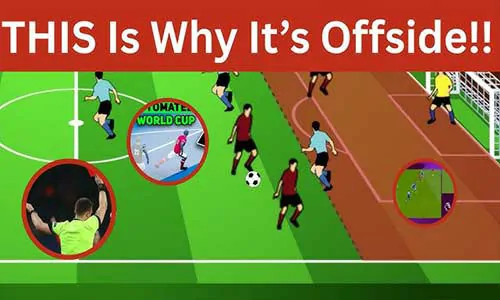
If you have ever watched a football match and felt bewildered by the referee blowing the whistle while an attacker celebrates, you are not alone. In this comprehensive guide, we present the Offside Rule Explained: A Beginner’s Guide to Football’s Most Confusing Law to help you master the beautiful game’s trickiest concept. Understanding this rule will completely change how you view tactical setups, player movements, and match-deciding referee decisions.
Whether you are a new fan trying to follow the World Cup or someone looking to win your next friendly debate with friends, this guide breaks down Law 11 of the International Football Association Board (IFAB) rulebook into simple, easy-to-digest concepts. Let us dive into the mechanics of this famous rule.
Table of Contents
- 1. Understanding the Basics of the Offside Position
- 2. Offside Position vs. Offside Offense: What is the Difference?
- 3. The Three Criteria for an Offside Offense
- 4. What Constitutes “Involvement in Active Play”?
- 5. Crucial Exceptions to the Offside Rule
- 6. Why the Offside Rule is Vital to Modern Tactics
- 7. The Modern Era: VAR and Semi-Automated Offside
- 8. Quick Reference: Common Offside Scenarios
- 9. Frequently Asked Questions (FAQs)
- 10. Conclusion and Next Steps
1. Understanding the Basics of the Offside Position
To understand the offside rule, we must first separate the physical location of a player on the pitch from the actual rule violation. Being in an offside position is not an offense in itself. A player can stand in an offside position for the entire ninety minutes without the referee blowing the whistle once, as long as they do not get involved in the play.
According to the official IFAB Laws of the Game, a player is in an offside position if any part of their head, torso, or feet is in the opponent’s half of the pitch and closer to the opponent’s goal line than both the ball and the second-last opponent.
Consequently, to determine if a player is in an offside position, you must look at three specific points of reference at the exact moment the ball is played by a teammate: the halfway line, the ball, and the second-last opponent. Usually, the goalkeeper is the last opponent, which means the last defending outfield player acts as the second-last opponent. However, if the goalkeeper runs up the pitch during a corner, any two outfield defenders can form the offside line.
2. Offside Position vs. Offside Offense: What is the Difference?
Many beginners make the mistake of calling an offside as soon as a player stands behind the defensive line. However, a linesman will only raise their flag if that player commits an active offense. This is where the Offside Rule Explained: A Beginner’s Guide to Football’s Most Confusing Law becomes incredibly helpful, as it clarifies this vital distinction.
An official offside offense occurs only when a player in an offside position becomes actively involved in the play at the moment the ball is touched or played by one of their teammates. If a player is standing in an offside position and the ball is passed to a teammate in an onside position, no offense has occurred.
Furthermore, hands and arms of all players, including the goalkeepers, are not considered when judging offside positions. For the purposes of measuring offside, the upper boundary of the arm is in line with the bottom of the armpit. Therefore, only the parts of the body that can legally score a goal are taken into account.
Why is the Offside Rule Explained: A Beginner’s Guide to Football’s Most Confusing Law So Vital to Modern Tactics?
Without this fundamental law, football would look vastly different. Attackers would simply hang around the opponent’s goal box waiting for long aerial passes, a tactic often referred to as “goal-hanging.” This would crowd the penalty area, eliminate the need for midfield build-up play, and reduce the tactical depth of the game.
By enforcing this rule, the game encourages teams to stretch the pitch, develop complex passing patterns, and utilize creative movements to break down organized defensive lines. It also allows defensive units to utilize high-line pressing systems, trusting their coordination to trap opposing attackers.
3. The Three Criteria for an Offside Offense
To make this law easier to visualize, let us break down the three strict criteria that must be met simultaneously for the referee to blow the whistle and award an indirect free kick to the opposing team.
- The Player’s Position: The player must be in the opponent’s half of the field and closer to the goal line than the ball.
- The Defensive Line: The player must be closer to the goal line than the second-last opponent (including the goalkeeper).
- The Moment of the Pass: The player’s position is judged at the exact millisecond the ball is kicked or played by a teammate, not when the player receives the ball.
For instance, if an attacker is in an onside position when a midfielder passes the ball, but runs past the defenders while the ball is traveling through the air, they are completely onside. This is a common point of confusion for casual viewers. The key is always the point of contact when the pass is made.
4. What Constitutes “Involvement in Active Play”?
If an attacker is in an offside position when the ball is kicked, when does the referee actually penalize them? The IFAB rulebook outlines three distinct actions that constitute active involvement in play.
Interfering with Play
This is the most straightforward scenario. It occurs when a player physically touches or plays the ball that was passed or touched by a teammate. If the ball makes contact with any part of their eligible body, the whistle is blown immediately.
Interfering with an Opponent
An attacker can be penalized without even touching the ball if they prevent an opponent from playing the ball. This includes blocking the goalkeeper’s line of sight, physically challenging a defender for the ball, or making obvious movements that clearly impact the ability of a defender to make a play.
Gaining an Advantage
This occurs when an attacker plays a ball that has rebounded off the goalpost, the crossbar, an opposing player, or a match official. If the attacker was in an offside position when the original shot or pass was made, they cannot jump on the rebound to score.
5. Crucial Exceptions to the Offside Rule
To fully grasp the game, you must also memorize the specific match situations where a player cannot be penalized for being in an offside position. These exceptions are critical for tactical set-pieces and quick restarts.
According to the official laws of FIFA, there is no offside offense if a player receives the ball directly from one of the following restarts:
- A Throw-in: Attackers can stand right next to the opponent’s goal line during a throw-in, and they will remain completely onside when the ball is thrown to them.
- A Corner Kick: Since the ball is placed on the corner arc, which is on the goal line itself, any pass delivered from a corner kick cannot result in an offside because the ball is ahead of all attackers.
- A Goal Kick: A team restarting play from their own penalty box can launch a long pass directly to an attacker standing deep inside the opponent’s half without any risk of an offside call.
In addition, a player cannot be offside if they receive the ball from an intentional play by an opponent. If a defender deliberately tries to pass the ball back to their goalkeeper but misplaces it, and an opposing striker intercepts it, the striker is not offside, regardless of their position.
6. Why the Offside Rule is Vital to Modern Tactics
Understanding the tactical implications of the rule helps us appreciate the chess match played by managers on the touchline. Many legendary managers have built entire defensive structures around this single rule.
For example, the famous “Offside Trap” was popularized by clubs like Arsenal in the 1980s and 1990s. The defenders would coordinate their movements to step forward in unison just before an opposing midfielder made a pass. This sudden forward movement instantly placed the opposing forwards in an offside position, forcing the linesman to raise the flag.
On the other hand, modern attacking systems use tactics like “running from deep” or “overlapping runs” to counter these defensive traps. Midfielders or full-backs run from behind the defensive line at high speed, timing their runs perfectly so they cross the defensive threshold after the ball is kicked, keeping them legally onside.
7. Applying the Offside Rule Explained: A Beginner’s Guide to Football’s Most Confusing Law in Real Matches
When you are watching a live match, applying the Offside Rule Explained: A Beginner’s Guide to Football’s Most Confusing Law requires looking at the screen with a trained eye. Instead of watching the ball, try focusing your eyes on the last line of defense. Notice how defenders constantly adjust their body posture to keep track of the attackers’ positions.
Furthermore, assistant referees (linesmen) are positioned specifically to run up and down the sideline, keeping themselves perfectly level with the second-last defender. This allows them to have an optimal lateral view of the line of play to make split-second decisions.
8. The Modern Era: VAR and Semi-Automated Offside
In recent years, the introduction of the Video Assistant Referee (VAR) has transformed how offside decisions are made. Previously, human error was a significant factor, as linesmen had to track both the moment of the kick and the position of the receiver simultaneously.
Today, VAR rooms utilize high-definition cameras to draw digital lines on the pitch, measuring player positions down to the millimeter. While this has increased the accuracy of decisions, it has also sparked widespread debate among fans and pundits who argue that “fractional offsides” ruin the flow and spirit of the game.
To streamline this process, major tournaments now employ Semi-Automated Offside Technology (SAOT). This system uses multiple dedicated cameras tracking player limbs and a sensor inside the match ball to determine offside points instantly, making the decision process faster and much more objective.
9. Quick Reference: Common Offside Scenarios
To help you memorize how the rule is applied in various match situations, study this practical comparison table:
| Match Scenario | Offside? | Why? |
|---|---|---|
| Attacker receives a pass directly from a teammate’s throw-in. | ONSIDE | Throw-ins are exempt from the offside rule. |
| Attacker is in their own half when the ball is kicked, then runs past the defenders. | ONSIDE | A player cannot be offside in their own half of the field. |
| Attacker is behind the defense, but the ball is passed backwards to them. | ONSIDE | An attacker is onside if they are behind the line of the ball when it is played. |
| A shot bounces off the post to an attacker who was offside during the shot. | OFFSIDE | The player gained an advantage from an offside position. |
| Defender intentionally passes back, but an offside attacker intercepts it. | ONSIDE | Offside does not apply when receiving the ball from an opponent’s deliberate play. |
10. Frequently Asked Questions (FAQs)
Can a player be offside on a pass that goes backward?
No, a player cannot be offside if they are behind the ball at the exact moment it is played. Even if they are deep behind the opposition defenders, if the ball is passed backwards or sideways from a teammate who is further up the pitch, they are legally onside.
Does the goalkeeper count as a defender for offside?
Yes, the goalkeeper is considered one of the defensive players. The rule states a player must be level with or behind the “second-last opponent.” Under normal circumstances, the goalkeeper is the last opponent, making the final outfield defender the second-last opponent.
Can you be offside in your own half?
No, you cannot be penalized for an offside offense if you are in your own half of the field when the ball is played by your teammate. The offside rule only applies in the opponent’s half of the pitch.
What is the penalty for being caught offside?
When an offside offense is committed, the referee stops play and awards an indirect free kick to the opposing team. This kick is taken from the exact spot on the pitch where the offside player became actively involved in the play.
Why do linesmen wait to raise their flag in modern games?
In modern football with VAR, assistant referees are instructed to delay raising their flag if a clear goal-scoring opportunity is developing. This prevents a premature whistle from stopping a valid play. If a goal is scored, VAR will review the play to make the correct decision retrospectively.
Can a player be offside if they do not touch the ball?
Yes, an attacker can be called offside if they interfere with an opponent. This includes blocking the goalkeeper’s vision, physically challenging a defender, or making movements that directly distract or impede the defensive player’s ability to play the ball.
11. Conclusion and Next Steps
Mastering football’s most debated rule does not have to be difficult. To recap this Offside Rule Explained: A Beginner’s Guide to Football’s Most Confusing Law, remember that being in an offside position is not a crime; it only becomes an offense when the player is actively involved in the game. By looking out for the three criteria—the halfway line, the second-last opponent, and the exact moment of the pass—you can confidently analyze any match decision like a seasoned pro.
The next time you watch a game, pay close attention to the linesmen and VAR reviews. You will find yourself understanding the tactics, runs, and defensive strategies on a much deeper level.
What are your thoughts on how VAR handles offside calls today? Do you think the rules should be modified further to favor attacking football? Leave a comment below or share this guide with a friend who is still trying to figure out why the flag went up!