Gegenpressing Explained: The High-Pressure Football Strategy
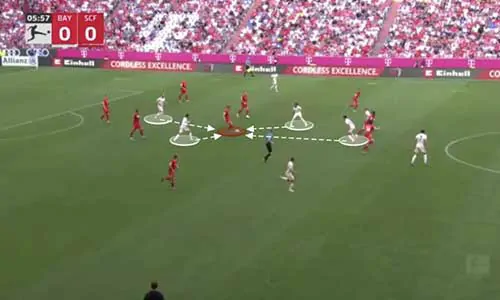
Modern football is a game of marginal gains, rapid transitions, and intense physical conditioning. Among the various tactical innovations that have defined the 21st century, few have had as profound an impact as the German concept of counter-pressing. In this comprehensive tactical analysis, we provide Gegenpressing Explained: The High-Pressure Football Strategy, detailing how this approach has revolutionized the sport, altered player recruitment, and redefined how teams transition from defense to attack.
To truly appreciate the nuances of modern tactical battles, one must understand how pressing has evolved from a defensive tool into an offensive weapon. Therefore, we will dissect the origins, mechanics, and physical demands of this thrilling style of play.
Table of Contents
- Gegenpressing Explained: The High-Pressure Football Strategy in Modern Play
- Why Gegenpressing Explained: The High-Pressure Football Strategy Changed European Football
- The Core Philosophy: Defending by Attacking
- The Four Key Counter-Pressing Variations
- Mastering Gegenpressing Explained: The High-Pressure Football Strategy on the Pitch
- Key Player Attributes and Team Roles
- Strengths, Weaknesses, and Tactical Counters
- Tactical Comparison: Pressing Styles
- Frequently Asked Questions (FAQs)
Gegenpressing Explained: The High-Pressure Football Strategy in Modern Play
To understand the core of counter-pressing, we must first define what the German word “Gegenpressing” actually means. Translated literally as “counter-pressing,” it is not merely the act of defending high up the pitch. Instead, it is the specific tactical instruction to win the ball back immediately after losing possession, exploiting the brief moments of defensive disorganization in the opposing team.
When a team loses the ball in the opponent’s half, their vulnerability is momentarily high. However, the team that has just won the ball is also highly vulnerable. Consequently, they are transitioning from a defensive shape to an offensive one, meaning players are spreading out, and their defensive guard is down. By applying immediate, aggressive pressure at this exact moment, the counter-pressing team seeks to catch the opponent off guard and launch a quick counter-attack close to the opposition goal.
Furthermore, this tactical approach minimizes the distance a team needs to travel to score. Rather than retreating into a mid-block or low-block defensive shape, players immediately swarm the ball-carrier. As a result, this high-risk, high-reward system requires absolute synchronization, immense physical fitness, and a collective mental commitment from every single player on the field.
Why Gegenpressing Explained: The High-Pressure Football Strategy Changed European Football
While often associated with contemporary German managers, the roots of counter-pressing stretch back several decades. To illustrate, early iterations of high-pressing football can be traced to the legendary Ajax and Netherlands “Total Football” teams of the 1970s, managed by Rinus Michels and orchestrated on the pitch by Johan Cruyff. Similarly, Valeriy Lobanovskyi’s Dynamo Kyiv utilized highly structured, data-driven pressing systems designed to suffocate opponents in their own half.
In the late 1980s and early 1990s, Arrigo Sacchi’s AC Milan perfected the art of defensive compactness and coordinated pressing. Sacchi’s side utilized a high defensive line and a tight 4-4-2 block, demanding that the distance between the defensive and attacking lines never exceed 25 meters. This spatial restriction made it incredibly difficult for opponents to build up play constructively.
Subsequently, German visionary Ralf Rangnick, often referred to as the “Godfather of Gegenpressing,” modernized these concepts. He realized that the most vulnerable moment for any team is within the first eight seconds of winning or losing the ball. His work with clubs like Ulm, Hoffenheim, and eventually the Red Bull football network laid the foundation for modern German coaching. Therefore, when Jürgen Klopp implemented his explosive “heavy metal” football at Borussia Dortmund and later at Liverpool, the footballing world took notice of just how devastating this strategy could be.
For more detailed tactical breakdowns of historical football structures, you can explore comprehensive guides on The Coach’s Voice, which analyzes the evolutions of these systems in depth.
The Core Philosophy: Defending by Attacking
The primary objective of counter-pressing is often misunderstood. Many casual observers believe it is simply a defensive tactic designed to prevent the opponent from counter-attacking. While this is certainly a beneficial byproduct, managers like Jürgen Klopp view it as an offensive playmaker. Klopp famously noted that no playmaker in the world can be as good as a good counter-pressing situation.
When a team wins the ball back high up the pitch, the opponent’s defensive line is usually disorganized. Midfielders have already begun making forward runs, and full-backs have pushed wide. Consequently, a quick forward pass immediately after a turnover can create high-quality goal-scoring opportunities before the opposition can re-establish their defensive structure.
To execute this successfully, teams must adhere to several fundamental tactical principles:
- Immediate Reaction: The moment possession is lost, players must not retreat. Instead, the closest players must instantly pressure the ball-carrier, while others cut off passing lanes.
- Compactness: The entire team must push up together. If the defensive line drops while the attackers press, vast spaces open up in midfield, allowing opponents to bypass the press easily.
- Numerical Superiority: The pressing team attempts to isolate the ball-carrier, creating 2v1 or 3v1 situations near the touchline or in tight central spaces.
- Aggressive Anticipation: Players must read the game proactively, anticipating where the pass will go rather than simply reacting to where it has been played.
The Four Key Counter-Pressing Variations
Not all counter-pressing systems are identical. Depending on the manager’s philosophy, the focus of the pressure can change. There are four widely recognized variations of this defensive system, each targeting a different aspect of the opponent’s structure.
1. Man-Oriented Pressing
In a man-oriented system, each player close to the ball immediately marks the nearest opponent. The goal is to deny the ball-carrier any easy passing options by ensuring every potential receiver is tightly monitored. While highly effective in stopping short passes, it can be physically exhausting and leaves the team vulnerable if an opponent successfully wins an individual 1v1 duel.
2. Space-Oriented Pressing
Popularized by Jürgen Klopp’s early Dortmund teams, space-oriented pressing focuses on the area surrounding the ball. Instead of focusing on specific players, the pressing team swarms the zone where the ball was lost. They create a suffocating cage around the ball-carrier, forcing a hurried clearance or a direct turnover. This method requires incredible spatial awareness and collective coordination.
3. Passing-Lane Oriented Pressing
This approach, heavily utilized by Pep Guardiola during his era-defining stint at Barcelona, focuses on cutting off the passing lanes. The player closest to the ball pressures the carrier, while surrounding teammates position themselves in the channels where the carrier is likely to pass. By closing these avenues, the defensive team lures the ball-carrier into making a risky, predictable pass that can be easily intercepted.
4. Ball-Oriented Pressing
In this system, players completely ignore the opponents and focus entirely on the ball itself. The nearest player attacks the ball with maximum aggression, aiming to tackle or force an error immediately, regardless of the surrounding passing options. It is a high-tempo, chaotic approach that relies on raw speed and physical dominance to disrupt the opponent’s rhythm.
Mastering Gegenpressing Explained: The High-Pressure Football Strategy on the Pitch
Implementing this style of play requires meticulous training and absolute tactical discipline. It is not simply a matter of telling players to run hard; rather, it is about structured trigger movements. A “pressing trigger” is a specific event on the pitch that signals the entire team to initiate their aggressive squeeze.
Common pressing triggers include:
- A Loose or Poor Touch: If an opponent miscontrols the ball, they must look down to recover it. Because their vision is temporarily restricted, the pressing team immediately closes them down.
- A Back-Pass: When a player passes backward, their body shape usually limits their options, and momentum shifts toward the opponent’s goal, making it an ideal time to advance.
- Passes to the Touchline: The sideline acts as an extra defender. If the ball is played to an opponent near the touchline, their passing angles are cut in half, making them easy targets for a trap.
- Receiving with Back to Goal: A midfielder or striker receiving the ball with their back to the attacking play cannot see incoming defenders, making them highly vulnerable to an immediate challenge.
To implement this successfully, managers structure their training sessions around small-sided games, particularly “Rondos.” These possession exercises are modified to train both rapid possession retention and immediate transition behavior. For instance, if the defending players in a Rondo win the ball, the attacking players must instantly switch roles and win it back within three seconds, deeply embedding the counter-pressing instinct into the players’ muscle memory.
Key Player Attributes and Team Roles
Running a high-octane tactical system places extreme demands on squad profiles. If even one player fails to execute their role, the entire system can collapse, allowing technical opponents to cut through the press with precision passing.
Consequently, recruiters look for highly specific profiles when building a squad capable of maintaining this intensity over a grueling 50-to-60-game season.
First and foremost is exceptional stamina and aerobic capacity. Midfielders and forwards must perform repeated, high-intensity sprints throughout the 90 minutes. Second is tactical intelligence and rapid decision-making. Players must instantly recognize pressing triggers and understand when to commit to a press and when to drop back to maintain structural integrity.
Additionally, psychological resilience is crucial. Players must remain completely focused and disciplined, accepting that they will occasionally be bypassed but maintaining the belief to press again on the next transition.
Let’s look at how individual positions operate within this framework:
- The Modern Sweeper-Keeper: Because the defensive line pushes incredibly high to compress the pitch, a vast space is left behind them. The goalkeeper must be comfortable rushing out of their box to clear long balls played over the top of the defense.
- Aggressive, Mobile Center-Backs: Center-backs in this system cannot afford to be slow. They must possess the recovery speed to handle counter-attacks in open space and have the confidence to defend 1v1 situations without deep cover.
- Athletic Full-Backs: Modern full-backs are crucial to width and chance creation. In transition, they must sprint forward to support the attack, yet possess the conditioning to recover rapidly when possession changes hands.
- The Engine-Room Midfield: Midfielders are the heart of the system. They must constantly cover lateral and vertical ground, breaking up play, winning second balls, and quickly recycling possession to the forwards.
- Defensively Active Forwards: In a high-pressing system, the forwards are the first line of defense. If the strikers refuse to press, the midfielders behind them will be exposed to easy overloads.
Strengths, Weaknesses, and Tactical Counters
Like any footballing philosophy, counter-pressing is not a perfect, unbeatable solution. While it has dominated European competition for years, elite coaches have developed highly effective strategies to exploit its inherent risks.
The primary advantage of the system is its ability to dominate games territorially. By keeping the ball in the opponent’s half, you keep danger far from your own goal. Furthermore, it creates a psychological chokehold on opponents. Teams facing an elite pressing side often panic, making unforced errors and rushing their play simply because they expect to be pressured immediately.
On the other hand, the physical toll is a massive concern. Teams playing this way often experience higher injury rates, particularly hamstring and muscle strains, due to the constant high-intensity sprinting. Furthermore, burnout is common; maintaining this level of intensity across multiple seasons requires exceptional squad depth and careful rotation.
Tactically, the biggest risk is the space left behind the defensive line. If an opponent possesses highly technical midfielders who can play under pressure, they can bypass the press with a single, precise long ball to a fast winger running into the vacant space behind the high line. Similarly, teams that deploy a very deep defensive block (often referred to as “parking the bus”) can neutralize counter-pressing, as they do not attempt to play out from the back, thereby denying the pressing team any high-turnover opportunities.
For further tactical analysis of how modern defensive blocks counteract high-pressing teams, you can consult tactical breakdowns available on major platforms like BBC Sport.
Tactical Comparison: Pressing Styles
To help visualize how counter-pressing differs from other standard defensive structures in world football, we have compiled a comparison table outlining key metrics.
| Defensive Style | Defensive Line Depth | Primary Trigger | Physical Demand | Main Tactical Risk |
|---|---|---|---|---|
| Gegenpressing | Extremely High | Loss of possession in final third | Extremely High | Long balls behind the defensive line |
| Traditional High Press | High | Opponent goal kicks / slow build-up | High | Midfield gaps if attackers are bypassed |
| Mid-Block | Medium (Halfway line) | Opponent crossing the halfway line | Moderate | Allowing opposition comfortable possession |
| Low-Block (Deep Defense) | Very Deep (Edge of penalty box) | Entering defensive third | Low (High mental focus required) | Sustained pressure, long-range shots |
Frequently Asked Questions (FAQs)
What is the main difference between ordinary pressing and Gegenpressing?
Ordinary pressing is a general defensive strategy where a team pressures opponents to win the ball, often initiated from a set defensive shape. Gegenpressing, however, refers specifically to counter-pressing immediately after losing possession in the attacking third to exploit the opponent’s brief moment of transition disorganization.
Who invented Gegenpressing?
While early versions were seen in Ajax’s Total Football and Lobanovskyi’s Dynamo Kyiv, the modern variation of Gegenpressing was refined and codified in Germany by managers like Ralf Rangnick, Wolfgang Frank, and later popularized globally by Jürgen Klopp.
Why is Gegenpressing physically demanding?
The system requires players to immediately perform maximum-intensity sprints the moment they lose the ball. This continuous cycling of attacking, losing the ball, sprinting to recover it, and attacking again demands world-class aerobic capacity and recovery power.
How do teams beat a counter-pressing system?
Teams counter it by either playing long balls over the high defensive line directly to fast wingers, utilizing highly technical midfielders who can resist pressure and pass out of tight spaces, or sitting in a very deep, compact defensive low-block.
Does Pep Guardiola use Gegenpressing?
Yes, Pep Guardiola utilizes a highly structured counter-pressing style, particularly focusing on passing lanes. He famously implemented the “six-second rule” at Barcelona, requiring players to aggressively hunt and win the ball back within six seconds of losing it.
What is a “pressing trigger” in football?
A pressing trigger is a specific event on the pitch—such as a defender’s heavy touch, a pass to the touchline, or a player receiving the ball with their back to play—that signals the entire team to collectively initiate their press.
Summary of Tactical Takeaways
Ultimately, high-pressure tactical systems have changed the landscape of modern football. By treating defensive actions as direct playmaking opportunities, teams can dominate matches, suffocate opponents, and score goals from high turnovers. However, the system requires a careful balance of physical conditioning, elite tactical awareness, and tactical flexibility to avoid being caught out by fast-breaking opponents.
As modern tactics continue to evolve, coaches will undoubtedly develop new variations to counter this intense style of play. Yet, the core principles of rapid transition and collective pressure will remain central to elite football for years to come.
Join the Tactical Discussion!
How do you think modern managers can further improve on these high-pressure tactics? Do you prefer a controlled, possession-based approach, or the intense, direct energy of a high press? Leave your thoughts and tactical theories in the comments section below!