Football Yellow and Red Cards Explained: Rules, Suspensions and History
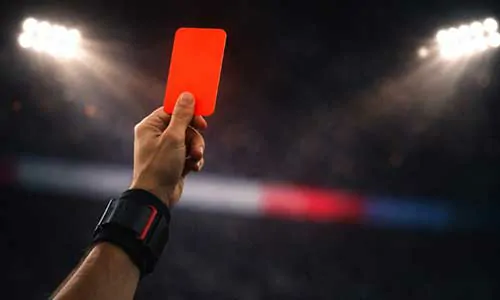
Table of Contents
- Introduction to Football Discipline
- The Historical Origins of Yellow and Red Cards
- Yellow Cards Explained: Cautions and Infractions
- Red Cards Explained: Dismissals and Serious Offenses
- Suspension Guidelines Across Major Leagues
- How VAR Influences Disciplinary Decisions
- Why Tactical Discipline and Squad Rotation Matter
- Quick Comparison: Yellow vs. Red Cards
- Conclusion and Final Thoughts
- Frequently Asked Questions (FAQ)
Introduction to Football Discipline
Football is a sport built on passion, skill, and physical contact. However, maintaining order on the pitch requires a strict set of rules. For millions of fans worldwide, understanding how referees govern matches is essential to fully appreciating the game. In this comprehensive guide, we have the complete mechanics of Football Yellow and Red Cards Explained: Rules, Suspensions and History to help you grasp how disciplinary actions shape modern football matches.
Whether you are a casual fan trying to understand why a player was sent off, or a dedicated follower analyzing suspension patterns, card regulations are crucial. These colored pieces of plastic do more than just stop play; they dictate team strategies, influence tournament outcomes, and carry significant historical weight. Let us dive deep into the evolution and application of these vital refereeing tools.
Moreover, modern football leagues have updated these protocols to keep up with the fast-paced nature of the game. Consequently, knowing the differences between a simple warning and a match-altering expulsion is more important than ever. This guide provides all the necessary details to keep you fully informed.
The Historical Origins of Yellow and Red Cards
Before the introduction of colored cards, referees had to rely on verbal warnings and physical gestures to communicate disciplinary actions. This system often led to confusion, especially during international matches where language barriers existed between referees and players. The need for a clearer system became undeniably obvious during the 1966 FIFA World Cup.
During a highly controversial quarter-final match between England and Argentina, several misunderstandings occurred on the pitch. The Argentine captain, Antonio Rattín, was sent off but claimed he did not understand the referee’s verbal instruction. Furthermore, English players Jack and Bobby Charlton only discovered they had been cautioned after reading the newspapers the following day. This lack of transparency demanded an immediate solution.
To address this issue, British referee Ken Aston proposed a system inspired by traffic lights. He realized that yellow (for caution) and red (for stop) would be universally understood by players, spectators, and officials alike, regardless of their native language. Consequently, FIFA introduced yellow and red cards at the 1970 World Cup in Mexico, revolutionizing match officiating forever.
Since their introduction, these cards have successfully standardized disciplinary communication. Over the years, football governing bodies like FIFA and the International Football Association Board (IFAB) have refined the rules governing these cards, making them the cornerstone of on-pitch discipline.
Yellow Cards Explained: Cautions and Infractions
A yellow card serves as a formal caution for a player, signaling that any further serious misconduct will result in expulsion from the match. Under IFAB Law 12, a referee can award a yellow card for several distinct reasons. Understanding these infractions helps fans anticipate when a referee is likely to reach for their pocket.
In addition to physical fouls, a caution can be issued for behavioral offenses. The primary reasons a player receives a yellow card include:
- Unsporting Behavior: This includes dangerous play, reckless tackling, or committing a tactical foul to stop a promising attacking transition.
- Dissent by Word or Action: Arguing with the referee or showing clear disapproval of an officiating decision.
- Persistent Infringement: Repeatedly violating the rules, even if the individual fouls themselves are minor.
- Delaying the Restart of Play: Preventing the opposing team from taking a quick free kick, throw-in, or goal kick to waste time.
- Failure to Respect the Required Distance: Standing too close to a corner kick, free kick, or throw-in.
- Entering or Leaving the Pitch Without Permission: Stepping onto or off the field without the referee’s explicit consent.
Furthermore, tactical yellow cards are common in modern football. Defenders and midfielders often choose to commit a “professional foul” to halt a dangerous counterattack. While this protects the team’s goal, the player accepts the personal cost of a yellow card, placing them under disciplinary pressure for the remainder of the match.
Football Yellow and Red Cards Explained: Rules, Suspensions and History of Player Discipline
When analyzing player discipline, it is important to remember that receiving a single yellow card has immediate tactical consequences. A cautioned player must play more cautiously to avoid a second booking. If a player receives two yellow cards in a single match, the referee will automatically show a red card, resulting in an immediate sending-off.
Consequently, managers must monitor cautioned players closely. If a defensive midfielder receives an early yellow card, they may be substituted early to prevent the risk of a red card. This tactical adjustment highlights how central the disciplinary system is to overall team strategy during 90 minutes of play.
Red Cards Explained: Dismissals and Serious Offenses
A red card is the ultimate disciplinary action a referee can take during a match. When a player receives a red card, they must leave the pitch immediately and cannot be replaced by a substitute. Consequently, their team must play the remainder of the match with ten players, which often shifts the balance of power dramatically.
Referees issue a direct red card for severe infractions that threaten player safety or compromise the integrity of the game. According to IFAB guidelines, the following actions lead to a straight red card:
- Serious Foul Play: A tackle or challenge that endangers the safety of an opponent or uses excessive force and brutality.
- Violent Conduct: Physical aggression, such as punching, kicking, or spitting at an opponent, teammate, or official.
- Denying an Obvious Goal-Scoring Opportunity (DOGSO): Deliberately fouling an attacker who has a clear path to goal, or using hands to block a goal-bound shot (excluding the goalkeeper inside their penalty area).
- Using Offensive or Abusive Language: Directing insults, offensive gestures, or abusive remarks at anyone on the pitch.
- Receiving a Second Caution: Accumulating two yellow cards in the same match automatically escalates to a red card.
On the other hand, the introduction of the “double jeopardy” rule has slightly modified how DOGSO is punished. If a player commits a foul inside the penalty box while making a genuine attempt to play the ball, they are typically cautioned with a yellow card instead of a red card, avoiding both a penalty kick and a dismissal simultaneously.
Suspension Guidelines Across Major Leagues
The consequences of receiving cards extend far beyond the final whistle of a single match. Suspension rules vary depending on the competition, and managing card accumulation is a key aspect of squad management throughout a long season. Let us explore how different leagues handle suspensions.
In most domestic leagues, such as the English Premier League, La Liga, and Serie A, accumulating five yellow cards within the first half of the season results in an automatic one-match suspension. If a player reaches ten yellow cards before a specific cutoff point later in the season, they face a two-match ban.
For direct red cards, the severity of the offense dictates the length of the suspension. For example, a red card received for a professional foul or a second yellow card usually results in a one-match ban. However, violent conduct or dangerous tackles typically carry a mandatory three-match suspension, which can be extended if the league’s disciplinary committee deems the action exceptionally severe.
In European competitions like the UEFA Champions League, the rules are slightly different. Players who accumulate three yellow cards across different matches face a one-match suspension. However, to ensure that the best players can participate in the prestigious final, all accumulated yellow cards are wiped out after the quarter-final stage.
How VAR Influences Disciplinary Decisions
The introduction of the Video Assistant Referee (VAR) system has significantly altered how disciplinary decisions are reviewed and enforced. While VAR cannot intervene in ordinary yellow card incidents, it plays a vital role in determining direct red card offenses.
VAR reviews four key areas: goals, penalties, mistaken identity, and direct red cards. If a referee misses a violent off-the-ball incident, or if a tackle is deemed potentially worthy of a straight red card, the VAR officials will advise the on-field referee to review the incident at the pitchside monitor.
This technology has helped reduce clear refereeing mistakes, ensuring that dangerous play is punished correctly. However, it also means that players can no longer escape punishment for off-the-ball incidents, as multiple camera angles monitor every corner of the pitch. Consequently, defensive discipline must remain incredibly high at all times.
Why Tactical Discipline and Squad Rotation Matter
Managing card accumulation is an essential part of a manager’s tactical planning. In highly competitive tournaments, losing a key player to suspension can disrupt the team’s momentum and force tactical shifts that opponents can exploit.
Therefore, coaching staffs closely monitor player disciplinary records. If a star player is one yellow card away from a suspension before a crucial derby match, the manager might rest them or instruct them to avoid risky challenges. This strategic management helps maintain a balanced squad throughout demanding schedules.
Additionally, understanding the nuance of Football Yellow and Red Cards Explained: Rules, Suspensions and History allows teams to exploit opponents’ disciplinary weaknesses. Targeting an opposing defender who is already on a yellow card by running fast attackers directly at them is a common tactic used to force a second mistake and secure a numerical advantage.
Quick Comparison: Yellow vs. Red Cards
To help summarize the differences, the table below provides a quick reference to how yellow and red cards function under standard football regulations.
| Feature | Yellow Card (Caution) | Red Card (Dismissal) |
|---|---|---|
| Immediate Penalty | Official warning; player remains on the pitch. | Immediate expulsion; team plays with 10 players. |
| Common Triggers | Reckless fouls, dissent, wasting time, tactical tripping. | Violent conduct, serious foul play, DOGSO, spitting. |
| Accumulation Effect | Two in one match equals a red card. Multiples lead to league bans. | Straight red results in an automatic suspension (1-3+ games). |
| VAR Role | No review allowed (unless part of a penalty/red card check). | Fully reviewable by the video assistant referee. |
Conclusion and Final Thoughts
In summary, yellow and red cards are much more than simple disciplinary actions; they are fundamental to how football is played, managed, and watched. From their brilliant invention by Ken Aston in the late 1960s to the modern integrations of VAR, these cards have brought clarity, safety, and drama to the beautiful game.
Understanding the rules, suspension structures, and historical context of these cards allows you to read the game on a deeper tactical level. The next time you see a referee reach for their pocket, you will know exactly what is at stake for both the player and the team’s season goals.
What is your opinion on how referees handle cards today? Do you think the current suspension rules are fair, or is VAR making matches too stop-and-start? Share your thoughts in the comments section below, and subscribe to our newsletter for more deep-dive analyses into the rules of football!
Frequently Asked Questions (FAQ)
Q1: Can a manager or coach receive a yellow or red card?
Yes, managers, coaches, and other bench staff can receive cards for unsporting behavior, dissent, or arguing with match officials. If a coach is shown a red card, they must leave the technical area immediately.
Q2: What happens if five players from the same team get red cards in one match?
According to IFAB rules, a match cannot continue if either team has fewer than seven players on the pitch. Therefore, if a team receives five red cards, the match is abandoned, and the opponent is awarded a walkover victory (usually 3-0).
Q3: Are yellow cards cleared before the World Cup knockout stage?
Yes, to prevent players from missing the final match due to single yellow card accumulation, FIFA wipes clean any single cautions after the quarter-final matches are completed.
Q4: Can a referee show a card after the final whistle has blown?
Yes, the referee’s authority begins when they enter the field of play before the match and ends when they leave. Cards can be issued during half-time or after the final whistle if misconduct occurs.
Q5: What is the “double jeopardy” rule in football?
The double jeopardy rule prevents a player from being sent off (red card) and conceding a penalty for a genuine attempt to play the ball inside the box. Instead of a red card, the player is cautioned with a yellow card.
Q6: How long is a standard suspension for a straight red card?
A straight red card for a tactical foul or second yellow usually results in a one-match suspension. However, violent conduct or dangerous tackles carry a standard three-match ban in most professional competitions.