Football Position Numbers Explained: The Meaning of 1 to 11
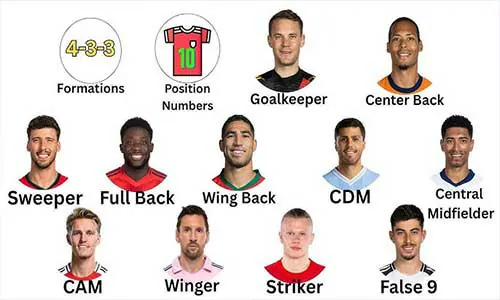
For generations, football has been a sport governed by tactics, skill, and deep-seated traditions. Among these traditions, few elements are as iconic yet misunderstood as the digits printed on the backs of players’ shirts. If you have ever wondered why certain players wear specific digits, this guide on Football Position Numbers Explained: The Meaning of 1 to 11 is designed to clarify how these numbers define tactical roles on the pitch.
Historically, shirt numbers were not merely for player identification; they represented a structured tactical map. In the early eras of the game, players were assigned numbers based on their starting positions in a specific formation. Although modern squad numbering has introduced more flexibility, the traditional system from 1 to 11 remains the universal language of football coaching, scouting, and analysis. Understanding these designations helps spectators read the game with greater tactical clarity.
Whether you are a casual fan wanting to understand why commentators refer to a creative player as a “classic number 10,” or an aspiring coach analyzing tactical setups, having these Football Position Numbers Explained: The Meaning of 1 to 11 will elevate your appreciation of the sport. Let us dive into the history, the positions, and the modern tactical significance behind each classic shirt number.
Table of Contents
- The Historical Origins of Football Shirt Numbers
- The Classic 2-3-5 Formation Blueprint
- Football Position Numbers Explained: The Meaning of 1 to 11
- Number 1: The Goalkeeper
- Number 2: The Right-Back
- Number 3: The Left-Back
- Number 4: The Center-Back / Defensive Anchor
- Number 5: The Center-Back / Stopper
- Number 6: The Defensive Midfielder
- Number 7: The Right Winger / Creative Outlet
- Number 8: The Box-to-Box Midfielder
- Number 9: The Striker / Center-Forward
- Number 10: The Attacking Midfielder / Playmaker
- Number 11: The Left Winger
- The Modern Evolution: Beyond the Standard 11
- Summary Table of Traditional Football Positions
- Conclusion and Tactical Takeaways
- Frequently Asked Questions (FAQs)
The Historical Origins of Football Shirt Numbers
To fully grasp Football Position Numbers Explained: The Meaning of 1 to 11, we must trace their origins back to the early 20th century. The first documented use of numbered shirts in association football occurred in Australia and England in the late 1920s. Specifically, in August 1928, Arsenal and Chelsea wore numbered shirts during their respective league matches to help referees and spectators identify players more easily.
During this era, squad numbering did not exist. Instead, the starting eleven players wore shirts numbered sequentially from 1 to 11, while the substitutes (when they were eventually introduced) wore higher numbers. The assignment of these numbers was directly linked to the prevailing tactical system of the time: the “Pyramid” or 2-3-5 formation.
Consequently, the numbering flowed systematically from the back of the pitch to the front, starting with the goalkeeper as number 1, moving through the defenders and midfielders, and ending with the left-sided attacker as number 11. Although formations have shifted dramatically over the decades, the terminology associated with these numbers has persisted in modern coaching vernacular.
The Classic 2-3-5 Formation Blueprint
To understand why a right-back wears number 2 and a left winger wears number 11, it is helpful to visualize the historic 2-3-5 formation. This alignment featured one goalkeeper, two full-backs, three half-backs, and five forwards. The numbering sequence followed a logical, zigzag pattern from defense to attack:
- Defense: The two full-backs were positioned as Number 2 (Right-Back) and Number 3 (Left-Back).
- Midfield (Half-backs): The three half-backs were lined up as Number 4 (Right Half), Number 5 (Center Half), and Number 6 (Left Half).
- Attack (Forwards): The five attackers across the front line were Number 7 (Right Wing), Number 8 (Inside Right), Number 9 (Center Forward), Number 10 (Inside Left), and Number 11 (Left Wing).
As tactics evolved into the W-M formation, the 4-4-2, and contemporary shapes like the 4-3-3, some of these numbers shifted backward or inward. However, their primary associations remained relatively intact, leaving us with the tactical vocabulary we use today.
Football Position Numbers Explained: The Meaning of 1 to 11
Below, we analyze each shirt number individually. This section provides the core details for Football Position Numbers Explained: The Meaning of 1 to 11, detailing the traditional duties, modern adaptations, and legendary figures associated with each jersey.
Number 1: The Goalkeeper
The number 1 shirt is universally reserved for the starting goalkeeper. As the final line of defense, the goalkeeper is the only player permitted to use their hands within their own penalty area. Historically, the role was purely about shot-stopping, claiming crosses, and clearing the ball downfield.
In modern football, however, the role of the number 1 has evolved significantly. Goalkeepers are now expected to act as “sweeper-keepers,” active in build-up play, distributing short passes to defenders, and sweeping up long balls behind a high defensive line. Famous examples of classic and modern number 1s include Lev Yashin, Gianluigi Buffon, Manuel Neuer, and Alisson Becker.
Number 2: The Right-Back
Traditionally, the number 2 is worn by the starting right-back. In earlier tactical eras, the right-back’s primary objective was to defend the right flank, neutralize the opposing team’s left winger, and provide cover for the central defenders.
In contemporary systems, a right-back is often highly offensive. Modern full-backs are required to possess immense stamina to sprint up and down the wing, delivering crosses into the box and acting as auxiliary wingers. Iconic players who redefined this position include Cafu, Gary Neville, and Dani Alves.
Number 3: The Left-Back
Similar to the right-back, the number 3 is traditionally assigned to the starting left-back. Their primary defensive duty is to secure the left flank against opposing right-sided attackers while coordinating with the rest of the defensive line.
Just like their counterparts on the right, modern left-backs are expected to be highly proficient in possession, frequently overlapping to join the attack and assist in transition play. Legendary figures who wore the number 3 shirt include Paolo Maldini, Roberto Carlos, and Ashley Cole.
Number 4: The Center-Back / Defensive Anchor
The assignment of the number 4 varies slightly depending on regional footballing cultures. In English football, the number 4 has historically been associated with a defensive-minded midfielder or a deep-lying central midfielder. In continental Europe and South America, however, it is frequently worn by a central defender.
Whether deployed in defense or midfield, the player wearing number 4 is typically tasked with breaking up opposition attacks, winning aerial duels, and initiating the team’s passing transitions. Notable players associated with this shirt include Patrick Vieira, Virgil van Dijk, and Pep Guardiola during his playing days.
Number 5: The Center-Back / Stopper
The number 5 is almost universally recognized as the shirt of the primary center-back or “stopper.” Positioned at the heart of the defense, this player is responsible for organizing the defensive line, marking opposing strikers, and clearing physical dangers from the penalty box.
In the modern game, central defenders are also expected to be comfortable on the ball, initiating attacks from the back with precise short and long-range passing. This blends physical dominance with technical composure. Legendary number 5s include Franz Beckenbauer, Fabio Cannavaro, Carles Puyol, and Rio Ferdinand.
Number 6: The Defensive Midfielder
When analyzing Football Position Numbers Explained: The Meaning of 1 to 11, the number 6 holds a crucial tactical position. Traditionally associated with the defensive midfielder (or “pivot”), the number 6 acts as the shield in front of the back four.
The primary responsibilities of a number 6 are to intercept passes, tackle opponents, and dictate the tempo of the game from a deep position. They act as the link between defense and midfield, requiring exceptional spatial awareness and passing accuracy. Iconic modern exemplars of the number 6 role include Sergio Busquets, Claude Makélélé, and Rodri.
Number 7: The Right Winger / Creative Outlet
The number 7 shirt is typically worn by the starting right winger or a creative second striker. This number carries a strong association with flair, speed, dribbling capability, and the ability to create goal-scoring opportunities from wide positions.
In many tactical setups, the number 7 is given license to cut inside, take shots on goal, or deliver precise crosses to the central striker. Over time, this number has acquired legendary status at clubs like Manchester United and Real Madrid, worn by iconic players such as George Best, David Beckham, Raul, and Cristiano Ronaldo.
Number 8: The Box-to-Box Midfielder
The number 8 shirt belongs to the central midfielder, specifically the “box-to-box” midfielder. This role requires an exceptionally versatile player who can contribute equally to both defensive interventions and attacking sequences.
A typical number 8 possesses the endurance to cover vast distances, helping the defensive line recover possession while also making late runs into the opponent’s penalty area to score goals. Legendary box-to-box midfielders who defined this shirt number include Steven Gerrard, Frank Lampard, Andrés Iniesta, and Toni Kroos.
Number 9: The Striker / Center-Forward
The number 9 is the quintessential goalscorer’s shirt. Traditionally worn by the primary center-forward or target man, this player’s main responsibility is to put the ball in the back of the net.
A classic number 9 is physically strong, capable of holding up the ball against physical defenders, and possesses sharp instincts inside the penalty area. In modern tactics, the role has expanded to include pressing from the front and drifting wide, but the core objective remains scoring. Iconic number 9s include Ronaldo Nazário, Alan Shearer, Robert Lewandowski, and Karim Benzema.
Number 10: The Attacking Midfielder / Playmaker
No other shirt number in football history carries as much prestige and romanticism as the number 10. Historically assigned to the “inside left” forward, it has evolved to represent the team’s primary playmaker or attacking midfielder, operating in the space between the midfield and the opposition defense.
The number 10 is expected to possess elite vision, precise passing, creative flair, and dribbling skills to unlock stubborn defensive blocks. They are the creative engine of the team. This legendary shirt has been worn by some of the greatest players to ever play the game, including Pelé, Diego Maradona, Zinedine Zidane, and Lionel Messi.
Number 11: The Left Winger
Rounding out the traditional starting lineup is the number 11, traditionally worn by the left winger. Similar to the right winger, this player is characterized by speed, agility, and the ability to beat defenders in one-on-one situations along the touchline.
In historical setups, a number 11 was tasked with hugging the left touchline and crossing the ball. In modern inverted winger systems, a left-footed player might play on the right, or a right-footed player might wear 11 on the left to allow them to cut inside and shoot. Iconic number 11s include Ryan Giggs, Arjen Robben, and Mohamed Salah.
The Modern Evolution: Beyond the Standard 11
While this guide on Football Position Numbers Explained: The Meaning of 1 to 11 details the classic foundation, modern football has seen significant shifts in numbering conventions. In 1993, the English Premier League introduced squad numbers, meaning players were assigned a permanent number for the entire season rather than changing shirts based on their starting position each match day.
This shift allowed players to select numbers based on personal preference, marketing, or superstitions. Consequently, we often see central defenders wearing number 26 (like John Terry) or strikers wearing number 45 (like Mario Balotelli). Furthermore, tactical innovations have led to hybrid positions, such as the “False 9,” where a player wearing number 9 or 10 drops deep into midfield to disrupt defensive structures, blurring the lines of traditional numbering.
In addition, global governing bodies like FIFA require squad numbering from 1 to 23 (or 26) for major international tournaments to maintain administrative order, ensuring the connection to traditional numbers remains visible on the world stage.
Summary Table of Traditional Football Positions
To help visualize these positions, the table below summarizes the traditional numbering system, typical roles, and notable historical examples.
| Number | Traditional Position | Key Tactical Attribute | Iconic Exemplars |
|---|---|---|---|
| 1 | Goalkeeper | Shot-stopping & Distribution | Yashin, Buffon, Neuer |
| 2 | Right-Back | Flank Defense & Overlapping Runs | Cafu, Dani Alves, G. Neville |
| 3 | Left-Back | Flank Defense & Crossing | Maldini, R. Carlos, A. Cole |
| 4 | Center-Back / Midfielder | Tackling & Tactical Discipline | Vieira, Van Dijk, Guardiola |
| 5 | Center-Back | Aerial Dominance & Interceptions | Beckenbauer, Cannavaro, Ferdinand |
| 6 | Defensive Midfielder | Tempo Control & Spatial Awareness | Busquets, Makélélé, Rodri |
| 7 | Right Winger | Pace, Dribbling & Crossing | C. Ronaldo, Beckham, Figo |
| 8 | Box-to-Box Midfielder | Work Rate & Transition Play | Gerrard, Lampard, Kroos |
| 9 | Center-Forward | Finishing & Physical Presence | Ronaldo Nazário, Lewandowski |
| 10 | Attacking Midfielder | Vision, Creativity & Playmaking | Pelé, Maradona, Messi, Zidane |
| 11 | Left Winger | Acceleration & Flank Penetration | Giggs, Robben, Salah |
Conclusion and Tactical Takeaways
Understanding the numbering system in football offers valuable context for analyzing tactics and team setups. As we have seen in this breakdown of Football Position Numbers Explained: The Meaning of 1 to 11, these digits are deeply tied to the history and strategic evolution of the sport.
While modern squad numbering has introduced more individual variety, the core roles associated with numbers 1 through 11 continue to shape how managers organize their squads. For more details on the official guidelines governing match play and player equipment, you can refer to The IFAB, which maintains the laws of the game.
What is your favorite classic position, and which player do you think embodied their shirt number best? Let us know in the comments below, and feel free to share this guide with fellow football enthusiasts!
Frequently Asked Questions (FAQs)
Q1: Why is the number 10 considered the most prestigious shirt in football?
The number 10 is historically worn by the team’s primary playmaker or most creative attacking player. Because legendary figures like Pelé, Diego Maradona, and Lionel Messi wore this number while dominating world football, it has become synonymous with elite skill, creativity, and leadership on the pitch.
Q2: Can a starting goalkeeper wear a number other than 1?
Yes, in modern club football, squad numbers are permanent, allowing goalkeepers to choose alternative numbers if they wish (for example, choosing 13, 22, or even 99). However, in many major international tournaments, governing bodies still require goalkeepers to be registered under specific numbers, with number 1 almost always reserved for the primary goalkeeper.
Q3: What is the tactical difference between a “number 6” and a “number 8”?
A “number 6” is primarily a defensive or holding midfielder whose main job is to shield the defense, break up opposition play, and distribute short, safe passes. A “number 8” is a box-to-box midfielder who operates dynamically across the pitch, contributing to both defensive recovery and attacking plays in the opponent’s half.
Q4: What does the term “False 9” mean?
A “False 9” refers to a tactical setup where the player occupying the central striker position (traditionally the number 9) drops deep into the midfield instead of staying high up the pitch. This movement draws opposing center-backs out of position, creating space for wingers (numbers 7 and 11) to make diagonal runs into the penalty box.
Q5: When did football teams stop using the strict 1 to 11 numbering system?
Strict 1 to 11 positional numbering began to shift in the late 20th century. The English Premier League formally introduced squad numbering with players’ names on shirts for the 1993/94 season. This practice was quickly adopted by leagues worldwide, allowing for personal squad numbers rather than traditional matchday positional numbering.
Q6: Why do some Spanish La Liga players have to wear numbers 1 to 25?
La Liga has strict squad registration rules. First-team players in Spain’s top flight must be assigned numbers between 1 and 25. Goalkeepers are specifically restricted to numbers 1, 13, or 25. Any player wearing a number from 26 upwards is registered as an academy or reserve team player.