Football Formations Guide: From 4-4-2 to Today’s Tactical Systems
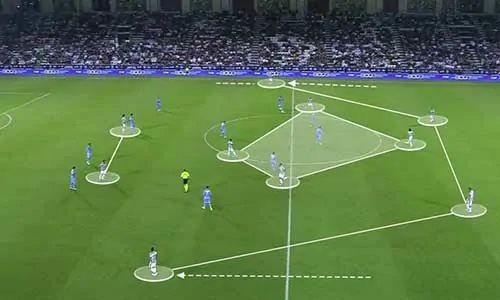
Historically, formations were seen as rigid frameworks where players stayed strictly within their designated zones. However, contemporary tactics prioritize fluid systems, positional rotation, and hybrid roles. Understanding how we transitioned from the classic flat structures to modern dynamic setups is essential for any serious fan, analyst, or coach looking to appreciate the depth of the beautiful game.
Table of Contents
- 1. The Classic Era: The Rise and Fall of the Flat 4-4-2
- 2. The Midfield Revolution: The Dominance of the 4-3-3
- 3. Football Formations Guide: From 4-4-2 to Today’s Tactical Systems – Key Differences
- 4. Modern Hybrid Systems: The 3-2-4-1 and Inverted Roles
- 5. How Modern Coaches Apply the Football Formations Guide: From 4-4-2 to Today’s Tactical Systems
- 6. Conclusion and Tactical Outlook
- 7. Frequently Asked Questions (FAQ)
1. The Classic Era: The Rise and Fall of the Flat 4-4-2
For several decades, particularly during the 1990s and early 2000s, the flat 4-4-2 was the undisputed king of football formations. Its popularity stemmed from its simplicity, symmetry, and the clear defensive coverage it provided across the entire pitch. With two banks of four, teams could easily defend in a compact block while maintaining a direct route to goal via two central strikers.
In this classic setup, roles were highly defined. The two central midfielders typically consisted of one defensive destroyer and one box-to-box engine. Meanwhile, traditional wingers were tasked with hugging the touchline and crossing balls into the penalty area. Up front, teams often utilized a partnership consisting of a physical target man paired with a quick, agile poacher who thrived on second balls.
Furthermore, legendary teams like Arrigo Sacchi’s AC Milan and Sir Alex Ferguson’s Manchester United utilized variations of this system to achieve historic success. Sacchi used a highly coordinated defensive line that relied on the offside trap and intense pressing. Consequently, they squeezed the space between the lines, making it incredibly difficult for opponents to build up play through the center.
However, as opponents began to find spaces between the midfield and defensive lines, the rigid nature of the 4-4-2 became a liability. Creative playmakers, often referred to as “number 10s,” started operating in the pockets of space behind the opposition’s midfield bank. This tactical shift exposed the limitations of having only two central midfielders, eventually paving the way for more flexible formations.
2. The Midfield Revolution: The Dominance of the 4-3-3
The transition away from the 4-4-2 was accelerated by the global adoption of the 4-3-3 system. This change was popularized by teams looking to establish numerical superiority in the center of the pitch. By deploying three central midfielders against a two-man midfield, teams could easily dominate possession and control the tempo of the match.
In a typical 4-3-3, the midfield trio is carefully balanced. It usually features a deep-lying defensive midfielder (often called the “anchor” or “single pivot”), a creative playmaker (regista), and an energetic box-to-box midfielder (mezzala). This structure allows the team to form natural passing triangles, making ball circulation much smoother and more secure against defensive pressure.
Additionally, the 4-3-3 revolutionized how wide forwards were utilized. Instead of traditional wingers who crossed from deep, coaches began using “inverted wingers” who played on the opposite side of their dominant foot. This tactical tweak allowed players like Lionel Messi at Barcelona or Arjen Robben at Bayern Munich to cut inside onto their stronger foot to shoot, while full-backs overlapped to provide width.
This period also saw the rise of the “False Nine” concept, where the central striker drops deep into midfield to drag central defenders out of position. This movement creates massive vacuums in the defensive line for the inverted wingers to exploit. The tactical intelligence required to execute this system showed that football was moving away from physical duels toward positional manipulation.
3. Football Formations Guide: From 4-4-2 to Today’s Tactical Systems – Key Differences
To truly appreciate the evolution of the game, it is helpful to analyze how these systems compare directly. The transition from rigid defensive blocks to fluid attacking structures has changed the physical, technical, and mental demands placed on players in every position.
Below is a comparative breakdown showing how different systems behave in terms of defensive stability, offensive fluidity, and transitional speed:
| Formation | Core Strength | Main Weakness | Key Tactical Role |
|---|---|---|---|
| 4-4-2 (Flat) | Defensive structure & wide coverage | Vulnerable to numerical midfield overloads | Box-to-box Midfielder |
| 4-3-3 (Inverted) | Midfield dominance & triangular passing | Susceptible to counter-attacks out wide | Single Pivot (Anchor) |
| 4-2-3-1 | Excellent balance & defensive transition | Can become isolated if the No. 10 is marked out | Creative Attacking Midfielder |
| 3-5-2 | Central density & defensive solidity | High physical demands on wing-backs | Durable Wing-backs |
As detailed in this comparative analysis, there is no single “perfect” system. Instead, the modern game has embraced hybrid models that allow teams to defend in one formation and attack in another. This level of adaptability represents the pinnacle of contemporary tactical design.
4. Modern Hybrid Systems: The 3-2-4-1 and Inverted Roles
In today’s elite football, the numbers listed on a pre-match graphic rarely represent how a team actually behaves on the pitch. Modern tactical systems are highly dynamic, changing shape depending on whether the team is in possession, out of possession, or transitioning between the two states.
One of the most notable modern developments is the 3-2-4-1 system, prominently used by innovative coaches to control the center of the pitch while maintaining defensive security against transitions. In this setup, a traditional full-back or central defender “inverts” into the midfield during the buildup phase. This tactical movement creates a solid box midfield (two holding midfielders and two advanced attacking midfielders) that dictates the tempo of the game.
To explore these concepts further, you can read the tactical analysis articles on The Athletic, which frequently breaks down match footage to show how these fluid shapes work in real-time. This structural flexibility makes modern teams incredibly difficult to press or counter-attack.
Furthermore, this hybrid approach requires players to possess immense tactical intelligence and versatility. Central defenders must be comfortable receiving the ball under pressure in midfield, while wingers must be disciplined enough to hold high and wide positions alone to stretch the opposition’s defensive block. The focus has shifted from static positions to dynamic zones of occupation.
5. How Modern Coaches Apply the Football Formations Guide: From 4-4-2 to Today’s Tactical Systems
Implementing a successful tactical philosophy requires more than just picking a formation on a whiteboard. Successful managers must carefully analyze several factors before deciding which system will yield the best results for their squad.
- Squad Profiles: A manager must assess whether their players have the physical and technical profiles required for a specific system. For example, playing a high-pressing 4-3-3 is impossible without energetic midfielders and quick center-backs who can defend a high line.
- Opponent Weaknesses: Modern analytical tools allow coaching staffs to dissect how their opponents defend. If an opponent struggles to defend wide areas, a coach might switch to a system that utilizes overlapping wing-backs to create overloads.
- Game State Adaptability: Teams must be able to shift systems mid-game. A team might start in a 4-3-3 to dominate possession but transition to a compact 4-4-2 or 5-4-1 late in the match to protect a lead.
For official coaching resources and standardized tactical definitions, the FIFA Training Centre offers valuable insights into how player development is aligned with modern tactical systems. Aspiring coaches around the globe utilize these framework principles to design their training sessions.
6. Conclusion and Tactical Outlook
In summary, the journey detailed in this Football Formations Guide: From 4-4-2 to Today’s Tactical Systems shows that football is in a state of constant intellectual evolution. The rigid, physical structures of the past have given way to highly fluid, intelligent, and versatile systems where spatial awareness and positional rotation are the primary keys to success.
Whether you prefer the defensive resilience of a classic flat block or the artistic fluidity of a modern hybrid system, understanding these tactical patterns enriches your viewing experience. As managers continue to innovate and push the boundaries of physical and mental performance, we can only look forward to the next major tactical breakthrough that will redefine how the game is played.
What is your favorite tactical system to watch on the pitch? Do you prefer traditional structures or modern hybrid systems? Let us know your thoughts in the comments below, and don’t forget to share this guide with your fellow football fans!
7. Frequently Asked Questions (FAQ)
Q1: Why did teams stop using the flat 4-4-2 formation?
A: Teams transitioned away from the flat 4-4-2 because it was easily overrun in midfield by three-man midfield systems (like the 4-3-3). The space between the defense and midfield lines was also easily exploited by creative playmakers.
Q2: What is an inverted full-back?
A: An inverted full-back is a defender who moves inside into the central midfield area during the possession phase, rather than staying wide on the touchline. This creates numerical superiority in the center of the pitch.
Q3: Which formation is best for counter-attacking football?
A: The 4-2-3-1 and the 3-5-2 are highly effective for counter-attacking. They offer a solid defensive base while allowing quick transitions through rapid wingers or wing-backs who can exploit spaces left behind by attacking opponents.
Q4: What is the main difference between a formation and a tactical system?
A: A formation is the basic starting structure of a team (e.g., 4-3-3), whereas a tactical system includes the instructions, movement patterns, pressing triggers, and player roles that define how the team actually plays.
Q5: How does a “False Nine” work?
A: A False Nine is a striker who drops deep into the midfield area to receive the ball, drawing the opposing center-backs out of position and creating space for inverted wingers to run into the vacant defensive channels.
Q6: Why are three-at-the-back systems becoming popular again?
A: Modern three-at-the-back systems offer excellent defensive solidity in central areas, allow safe possession buildup from the back, and provide natural width via offensive wing-backs without sacrificing structural integrity.