FIFA World Cup Host Selection Process: Evolution Through the Years
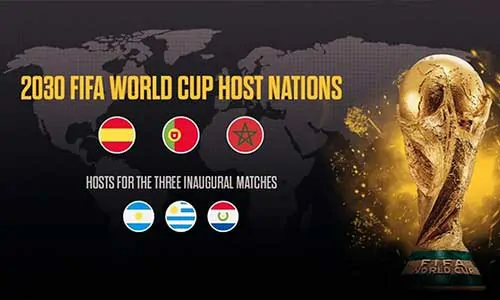
Table of Contents
- Introduction to the FIFA Selection System
- The Early Era (1930–1950): Informal Agreements and Executive Decisions
- The Rotational System (1954–2002): Continental Balancing
- The Modern Era (2006–2022): Intense Bidding and Calls for Reform
- The Current Voting Mechanism (2026 and Beyond): Transparency and Joint Bids
- Key Factors in the Modern Selection Process
- The Economic and Geopolitical Impact of Hosting
- Conclusion: The Future of the World Cup
- Frequently Asked Questions (FAQ)
Introduction to the FIFA Selection System
The FIFA World Cup stands as the pinnacle of global sports, drawing billions of viewers and generating unprecedented cultural and economic activity every four years. However, long before the opening whistle blows, a complex and highly competitive administrative campaign takes place behind closed doors. Analyzing the FIFA World Cup Host Selection Process: Evolution Through the Years reveals how international football shifted from informal diplomatic agreements to a highly structured, multi-billion-dollar bidding mechanism. This progression reflects the growth of football as a global business and the changing geopolitical priorities of nations seeking to project soft power on the world stage.
Historically, choosing a host nation was a matter of convenience, proximity, and personal influence within FIFA’s early leadership. Today, the process is a rigorous, multi-stage evaluation requiring extensive guarantees on infrastructure, human rights, and financial sustainability. Consequently, understanding this historical journey helps us appreciate the scale of modern sports diplomacy and the structural reforms that continue to shape the tournament’s future footprint.
Furthermore, as the tournament expands to accommodate 48 teams, the demands on host countries have escalated significantly. This reality has forced a move away from single-nation bids toward collaborative, multi-country hosting models. By examining how these procedures have adapted, we gain a clearer picture of where the global game is heading and how the balance of power within sports governance has evolved.
The Early Era (1930–1950): Informal Agreements and Executive Decisions
In the early decades of international football, the selection of a host country was characterized by informal lobbying, geographic practicalities, and geopolitical posturing. When FIFA decided to launch the inaugural tournament in 1930, several European nations expressed interest. However, Uruguay was ultimately chosen because of its willingness to cover all travel and accommodation expenses for participating teams, alongside the celebration of its constitution’s centenary.
This decision, while historically significant, created immediate logistical challenges. Due to the long and costly sea voyage across the Atlantic, only four European nations agreed to make the journey, highlighting the extreme geographic isolation of the era. Consequently, FIFA realized that geographic balance would be essential to maintaining the tournament’s international appeal and ensuring widespread participation.
To appease European associations, the subsequent tournaments in 1934 and 1938 were held in Italy and France, respectively. However, this decision triggered outrage in South America, where football associations believed the tournament should alternate strictly between the two continents. As a result of this perceived Eurocentric bias, powerhouse nations like Argentina and Uruguay boycotted the 1938 tournament in France, illustrating the deep-seated political tensions embedded in the early selection process.
Evaluating the FIFA World Cup Host Selection Process: Evolution Through the Years of Early Diplomacy
Following the devastation of World War II, the revival of the tournament required a pragmatic approach to selection. Brazil was awarded the 1950 tournament because it was one of the few candidate nations with both the financial capacity and the undamaged infrastructure necessary to host such a large-scale event. During this period, decisions were primarily made by a small circle of FIFA executives, with minimal formal criteria or structured bidding books.
Indeed, this early phase of the FIFA World Cup Host Selection Process: Evolution Through the Years demonstrated that hosting was largely treated as a diplomatic privilege. The lack of standardized evaluations meant that personal relationships and political alignments played a dominant role in determining where the games would be played, a trend that would persist for decades to come.
The Rotational System (1954–2002): Continental Balancing
To prevent future boycotts and establish a sense of institutional fairness, FIFA adopted an informal continental rotational policy starting in 1958. Under this system, the tournament alternated systematically between Europe and the Americas, ensuring that both traditional strongholds of global football remained engaged. This compromise stabilized the tournament’s growth and allowed it to develop into a truly global spectacle.
Throughout the latter half of the 20th century, this rotational pattern remained largely unbroken. Tournaments in Sweden (1958), Chile (1962), England (1966), and Mexico (1970) demonstrated the success of alternating host regions. This predictability allowed nations to plan their infrastructure investments far in advance, raising the overall quality of the competition and the spectator experience.
However, as the global popularity of football exploded under the leadership of João Havelange, who became FIFA President in 1974, the organization began to look beyond its traditional borders. Havelange recognized the immense commercial and political potential of expanding the sport’s footprint into new markets, most notably North America, Asia, and Africa.
Breaking the Rotational Pattern: Expansion to New Frontiers
The first major break from traditional continental rotation occurred with the selection of the United States for the 1994 tournament. Despite having a limited domestic football culture at the time, the US presented an unparalleled commercial opportunity, featuring massive existing stadiums and highly sophisticated corporate sponsorship networks. The decision proved to be a major financial success, setting attendance records that still stand today.
Following the success of 1994, FIFA continued its expansion strategy by awarding the 2002 tournament to South Korea and Japan. This was the first time the World Cup was held in Asia and the first time it featured co-hosting. While the co-hosting arrangement presented significant logistical and political hurdles, it proved that the selection process was no longer bound by traditional geographical limitations.
The Modern Era (2006–2022): Intense Bidding and Calls for Reform
By the turn of the millennium, hosting the World Cup had become a massive geopolitical prize, offering nations a unique platform to showcase their economic development and modernize their public infrastructure. This increased competition led to highly sophisticated, multi-million-dollar bidding campaigns, where candidate nations employed elite lobbying firms and global ambassadors to secure votes.
Under the regulations of this era, the selection decision rested entirely in the hands of the FIFA Executive Committee (ExCo), a powerful body consisting of just 24 individuals. This highly centralized voting structure created an environment susceptible to intensive lobbying, backroom deals, and conflicts of interest. The stakes were incredibly high, and the bidding process became increasingly controversial.
The limits of this system became apparent during the selection of Germany for the 2006 tournament, which was marred by allegations of buying votes, and the subsequent selection of South Africa for 2010, which was celebrated as the first African World Cup but was later shadowed by investigations into financial irregularities.
Redefining the FIFA World Cup Host Selection Process: Evolution Through the Years of Crisis
The climax of this controversial era occurred in December 2010, when the FIFA Executive Committee took the unprecedented step of voting on the hosting rights for two tournaments simultaneously: the 2018 and 2022 editions. The rights were awarded to Russia and Qatar, respectively, sparking widespread global scrutiny and triggering extensive investigations by international law enforcement agencies.
The fallout from these decisions led to the historic 2015 FIFA corruption scandal, which resulted in the removal of numerous high-ranking officials, including longtime President Sepp Blatter. The crisis made it clear that the traditional FIFA World Cup Host Selection Process: Evolution Through the Years had to be fundamentally reformed to restore public trust and ensure long-term corporate compliance.
Consequently, FIFA embarked on an extensive restructuring process designed to replace the opaque Executive Committee system with a more democratic, transparent, and auditable voting mechanism.
The Current Voting Mechanism (2026 and Beyond): Transparency and Joint Bids
In response to the controversies of the past, FIFA introduced a series of landmark reforms designed to make the bidding and selection process highly transparent and objective. The most significant structural change was the abolition of the 24-member Executive Committee’s exclusive voting rights. Instead, the power to select the host nation was transferred to the entire FIFA Congress, which represents over 200 member associations.
Under the new system, every member association casts a public vote, ensuring that the decision-making process is fully auditable. Furthermore, FIFA established a rigorous, independent technical evaluation committee tasked with assessing each bid’s feasibility, risk factors, and adherence to international standards before any vote can take place.
The 2026 selection process, which awarded the tournament to the joint bid of the United States, Canada, and Mexico (the “United Bid”), was the first to be conducted under these strict regulations. The process showed that public scoring of bids and open voting could significantly reduce the influence of backroom lobbying.
An Analytical View of the FIFA World Cup Host Selection Process: Evolution Through the Years
As the tournament expands to a 48-team format, the logistical demands on host nations have grown exponentially. A modern host must now provide state-of-the-art training facilities, advanced transport networks, high-capacity international airports, and at least 16 elite stadiums meeting precise capacity requirements. Because of these immense requirements, joint bids have transitioned from a rare exception to the standard operational model.
This reality is clearly visible in the selection of the 2030 tournament, which features an unprecedented tri-continental arrangement. While the primary hosts will be Morocco, Portugal, and Spain, celebratory opening matches will be held in Uruguay, Argentina, and Paraguay to mark the centenary of the first World Cup. This complex arrangement shows how the FIFA World Cup Host Selection Process: Evolution Through the Years has adapted to balance commercial viability, logistical demands, and historical sentiment.
Meanwhile, the 2034 bidding process has continued this trend of strategic planning, with Saudi Arabia emerging as the sole bidder after FIFA limited the bidding to member associations from Asia and Oceania, highlighting that geopolitical positioning still plays a crucial role in sports governance.
Key Factors in the Modern Selection Process
To successfully navigate the contemporary selection system, bidding nations must satisfy a strict set of technical and ethical criteria. These requirements are outlined in FIFA’s comprehensive bidding registration documents and are evaluated by independent inspectors.
The table below outlines the core components that modern bid books must address, reflecting the high standards expected of 21st-century hosts:
| Criteria Category | Key Requirements | Relative Importance |
|---|---|---|
| Infrastructure | Minimum of 16 modern stadiums with capacities between 40,000 and 80,000+ seats. | High (Crucial for tournament operations) |
| Human Rights | Strict alignment with UN Guiding Principles, labor laws, and protection of worker safety. | High (Mandatory since post-2015 reforms) |
| Transport & Accommodation | High-speed rail links, airport capacity, and thousands of high-quality hotel rooms. | Medium-High (Key for fan experience) |
| Financial Commitments | Government tax exemptions, security guarantees, and commercial viability studies. | High (Ensures commercial profitability) |
In addition to these technical specifications, sustainability and legacy planning have become vital considerations. Bidding nations must prove that their investments will not result in abandoned infrastructure or “white elephant” stadiums. Instead, they must present clear strategies for how these facilities will be integrated into local communities and domestic sports leagues after the tournament concludes.
The Economic and Geopolitical Impact of Hosting
The motivations for hosting a World Cup extend far beyond a passion for football. For many nations, the tournament serves as a powerful catalyst for national development and international branding. By hosting millions of international visitors and capturing global television audiences, countries can reshape their international image, promote tourism, and stimulate domestic construction industries.
For example, South Africa used the 2010 World Cup to showcase its post-apartheid social cohesion and economic progress to a global audience. Similarly, Qatar’s extensive investments ahead of the 2022 tournament were part of its broader “National Vision 2030” initiative, aiming to transform the country into a global hub for business, culture, and sports tourism.
However, these benefits often come with significant financial risks. The costs of stadium construction, security, and urban transportation upgrades can run into tens of billions of dollars, leading to public debate over the prioritization of public funds. Consequently, modern bids must balance national ambition with fiscal responsibility to ensure long-term domestic support.
Conclusion: The Future of the World Cup
The journey of how FIFA selects its host nations highlights the dramatic evolution of international sports governance. From the informal, handshake agreements of the 1930s to the transparent, congress-wide voting systems of today, the selection process has adapted to meet the demands of an increasingly complex global landscape.
As the tournament continues to expand and global priorities shift, the emphasis on transparency, human rights, and environmental sustainability will likely intensify. By maintaining rigorous, objective standards and encouraging collaborative co-hosting, FIFA has the opportunity to make the World Cup more accessible, financially sustainable, and socially impactful for host communities around the globe.
If you would like to explore more about the history of international sports and the structural developments of global football, visit the official FIFA Official Website or read about historical tournaments on Encyclopedia Britannica.
What is your take on the evolution of host selection?
Do you support the shift toward multi-country joint bids, or do you prefer the traditional single-nation hosting model? Share your thoughts in the comments below or join the conversation on social media!
Frequently Asked Questions (FAQ)
1. How was the host of the first FIFA World Cup selected?
The host of the first World Cup in 1930 was selected through informal discussions at the FIFA Congress. Uruguay was chosen because its national team had won consecutive Olympic titles and the country agreed to pay all travel and accommodation expenses for participating nations, while celebrating its centenary of independence.
2. Why did FIFA abandon the continental rotational system?
The strict continental rotational system was abandoned as global commercial opportunities expanded. FIFA sought to grow the game in massive untapped markets like North America and Asia, leading to the selection of the United States in 1994 and the joint bid of South Korea and Japan in 2002.
3. Who currently votes on the FIFA World Cup host?
Currently, the host nation is selected through a democratic vote by the entire FIFA Congress, which consists of over 200 member associations. Each member’s vote is made public, a system implemented to replace the old method where only the 24-member Executive Committee voted in private.
4. What are the key infrastructure requirements for hosting?
Modern hosts must provide at least 16 state-of-the-art stadiums with spectator capacities ranging from 40,000 to over 80,000. Additionally, hosts must guarantee advanced airport capacities, high-speed rail systems, modern training facilities, and extensive hotel accommodation networks.
5. Why are joint bids becoming more common for future World Cups?
Joint bids are becoming more common because the tournament has expanded to 48 teams, featuring 104 matches. The logistical, financial, and infrastructural demands are now too large for most single nations to bear comfortably, making collaborative hosting a more sustainable option.
6. How do human rights criteria affect the bidding process today?
Following the post-2015 reforms, bidding nations must submit a comprehensive human rights strategy. This strategy must outline measures to protect workers’ rights, ensure press freedoms, and protect local communities in alignment with the United Nations Guiding Principles on Business and Human Rights.