FIFA World Cup 2026 Stadium Guide: Locations, Capacities and Key Facts
The beautiful game is heading to North America for an unprecedented, historic tournament. If you are preparing to witness this historic event, you need a comprehensive, highly detailed resource. Welcome to our complete FIFA World Cup 2026 Stadium Guide: Locations, Capacities and Key Facts, designed to provide you with all the essential details for every single venue hosting matches across Canada, Mexico, and the United States. This tournament features an expanded format with 48 teams competing across 16 world-class venues, setting the stage for unmatched drama.
Furthermore, this edition represents a historic collaboration between three giant nations, meaning fans will travel across different climates, cultures, and time zones. Navigating this vast landscape requires careful planning and reliable information. Therefore, this guide breaks down every stadium by country, showcasing official capacities, locations, and historical highlights to help you prepare your journey.
Table of Contents
Why You Need This FIFA World Cup 2026 Stadium Guide: Locations, Capacities and Key Facts
With 48 teams participating instead of the traditional 32, the scale of this tournament is larger than anything football has seen before. Consequently, a total of 104 matches will be played over 39 action-packed days. Knowing the exact stadium details is essential not just for ticket buyers, but also for spectators trying to understand travel distances and match conditions.
In addition, FIFA has finalized stadium seating capacities to ensure maximum safety and a premium viewing experience. Some venues are historic icons undergoing modern face-lifts, while others are technological marvels of the 21st century. Understanding these nuances will help you appreciate the unique character of each matchday location.
To help you navigate these spectacular arenas, we have compiled this ultimate resource. By looking at their architecture, locations, and seating configurations, you can easily plan which matches fit your summer schedule.
Canada Venues
As you plan your travel across North America, refer to this FIFA World Cup 2026 Stadium Guide: Locations, Capacities and Key Facts to organize your ticket bookings and itineraries. Canada is hosting the tournament for the very first time, bringing matches to two major coastal cities: Toronto and Vancouver.
Toronto Stadium (BMO Field)
Located in the vibrant city of Toronto, Ontario, Toronto Stadium is situated right at Exhibition Place, within easy reach of the downtown core. For the upcoming tournament, FIFA has finalized its official tournament capacity at 43,036 spectators, making it the most intimate arena of the entire tournament.
Initially constructed in 2007 to host the FIFA U-20 World Cup, this venue has hosted numerous historic matches for both the men’s and women’s national teams. Over the years, the stadium has undergone multiple expansions. For the 2026 tournament, additional temporary seating has been installed to meet strict FIFA guidelines. It features a modern, English Premier League-style roof canopy that shields spectators while preserving an open-air atmosphere.
BC Place Vancouver
BC Place Vancouver is located at 777 Pacific Boulevard in the beautiful, coastal city of Vancouver, British Columbia. The venue boasts an official tournament capacity of 52,497. Since its initial opening in 1983, BC Place has stood as a crown jewel of sports in Western Canada.
The stadium is globally recognized for its state-of-the-art cable-supported retractable roof system, which is the largest of its kind in the world. Furthermore, the venue features a massive, suspended high-definition scoreboard that ensures fans do not miss a single second of play. Having hosted the spectacular 2015 FIFA Women’s World Cup Final, the stadium has a proven track record of handling high-stakes international soccer.
Mexico Venues
Continuing through our FIFA World Cup 2026 Stadium Guide: Locations, Capacities and Key Facts, we explore the vibrant stadiums of Mexico. Soccer is a religion in Mexico, and the country is making history by becoming the first nation to host or co-host the World Cup three times.
Guadalajara Stadium (Estadio Akron)
Guadalajara Stadium, commonly known as Estadio Akron, is located in Zapopan, Jalisco, Mexico. It features an official tournament capacity of 45,664. Completed in 2010, the stadium is widely celebrated as one of the most architecturally unique arenas in North America.
Its exterior resembles a grass-covered volcanic cone, blending seamlessly with the surrounding landscape, while its white, cloud-like canopy roof hovers above the stands. This stunning design ensures excellent acoustics, amplifying the passionate chants of Mexican fans. It serves as the home ground for the legendary club CD Guadalajara (Chivas) and offers an exceptional, modern matchday experience.
Mexico City Stadium (Estadio Azteca)
The historic Mexico City Stadium, widely known as Estadio Azteca, is located in the southern borough of Coyoacán in Mexico City. It boasts a massive tournament capacity of 80,824. Estadio Azteca is arguably one of the most legendary shrines in football history, having hosted two previous FIFA World Cup Finals in 1970 and 1986.
Consequently, it has witnessed iconic footballing moments, including Diego Maradona’s famous ‘Hand of God’ goal and Pelé’s crown-defining performances. By hosting matches in 2026, Azteca secures its legacy as the first stadium ever to hold matches across three distinct World Cup tournaments. It will host the highly anticipated opening match of the 2026 edition, backed by extensive modern renovations.
Monterrey Stadium (Estadio BBVA)
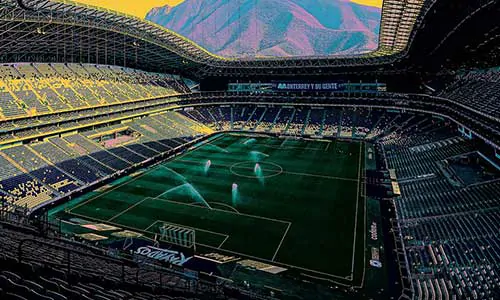
Monterrey Stadium, locally known as Estadio BBVA, is located in Guadalupe, Nuevo León, Mexico. It has a finalized tournament capacity of 51,243. Completed in 2015, the stadium is affectionately dubbed ‘El Gigante de Acero’ (The Steel Giant) due to its striking, flowing metallic exterior design.
Beyond its contemporary architecture, the venue is globally famous for its breathtaking backdrop, with the iconic Cerro de la Silla mountain towering directly behind the open end of the stadium. This stunning natural vista provides some of the most spectacular broadcast imagery in all of sport. In addition to its visual appeal, the stadium offers excellent proximity between the seating bowl and the pitch.
United States Venues
Next in our FIFA World Cup 2026 Stadium Guide: Locations, Capacities and Key Facts, we examine the massive arenas of the United States. The US features 11 host venues, many of which are NFL stadiums equipped with incredible technological integrations and colossal seating capacities.
New York New Jersey Stadium (MetLife Stadium)
New York New Jersey Stadium, known locally as MetLife Stadium, is located in East Rutherford, New Jersey, just a few miles west of New York City. It features an official tournament capacity of 80,663. This massive, modern multi-purpose stadium has been selected to host the single most important match of the tournament: the Grand Final on July 19.
Opened in 2010, the venue typically serves as the home field for two NFL franchises, the New York Giants and the New York Jets. Accessible by a dedicated rail link connected to the major transport hubs of Manhattan, the stadium is fully equipped to handle the immense global influx of media and fans for the final showdown.
Dallas Stadium (AT&T Stadium)
Dallas Stadium, widely known as AT&T Stadium, is located in Arlington, Texas, within the Dallas-Fort Worth metroplex. It has a certified tournament capacity of 70,649. Famously nicknamed ‘Jerry World’ after Cowboys owner Jerry Jones, this colossal facility is one of the largest and most expensive sports venues in the world.
The stadium features a retractable roof and a massive, center-hung high-definition video board that stretches over 60 yards. For the 2026 World Cup, Dallas Stadium has been awarded a staggering nine matches, including a high-stakes semi-final, which is the most matches allocated to any single venue.
Los Angeles Stadium (SoFi Stadium)
Los Angeles Stadium, globally recognized as SoFi Stadium, is located in Inglewood, California, just minutes from LAX airport. It features an official tournament capacity of 70,492. Completed in 2020 as the most expensive sports venue ever built, its design is a true masterpiece of modern architecture.
The stadium is covered by a massive, translucent ETFE canopy that allows natural light while shielding spectators from the elements. Suspended above the field is the ‘Infinity Screen,’ a dual-sided, 2.2-million-pound 4K video board that wraps around the entire playing area. The stadium is slated to host the opening match for the US men’s national team, promising an electric atmosphere.
Atlanta Stadium (Mercedes-Benz Stadium)
Atlanta Stadium, officially known as Mercedes-Benz Stadium, is located in the heart of downtown Atlanta, Georgia, USA. It features an official tournament seating capacity of 68,239. Renowned as a pinnacle of architectural innovation, the venue features a unique, eight-panel retractable roof that opens and closes like a camera lens.
Additionally, a massive 360-degree ‘halo’ video board wraps around the upper rim of the stadium, delivering an immersive visual experience to every spectator. Since its opening in 2017, the venue has hosted major events such as the NFL Super Bowl. The stadium typically features synthetic turf, but a high-tech natural grass pitch is being specially cultivated and installed for the World Cup.
Boston Stadium (Gillette Stadium)
Boston Stadium, known locally as Gillette Stadium, is situated in Foxborough, Massachusetts, roughly 30 miles southwest of downtown Boston. It has a finalized World Cup capacity of 64,146. Since opening in 2002, the stadium has served as the legendary home turf for the New England Patriots.
To prepare for the global stage, the venue has recently undergone over $250 million in renovations. These upgrades include a newly reconstructed, towering lighthouse in the north end zone, as well as the largest outdoor curved stadium screen in the United States. While the stadium normally uses synthetic turf, a advanced natural grass surface will be laid down for the tournament.
Houston Stadium (NRG Stadium)
Houston Stadium, known locally as NRG Stadium, is located in Houston, Texas, close to the city’s museum district. It features a tournament capacity of 68,777. Opened in 2002, this multi-purpose arena made history as the first NFL stadium constructed with a retractable roof system.
Over the last two decades, the venue has compiled an impressive hosting resume, including multiple Super Bowls and major international soccer friendlies. The stadium’s flexible design and expansive indoor space offer climate-controlled comfort, protecting fans and athletes from the intense Texas summer heat.
Kansas City Stadium (GEHA Field at Arrowhead Stadium)
Kansas City Stadium, traditionally known as Arrowhead Stadium, is located in Kansas City, Missouri. It has a confirmed tournament capacity of 69,045. First opened in 1972, this historic open-air stadium is legendary for its passionate fanbase and has officially set the Guinness World Record for the loudest crowd noise ever recorded at an outdoor sports venue.
This intense atmosphere makes it one of the most intimidating yet exciting places to watch a match. Known as the ‘Soccer Capital of America’ due to its rich history with the sport, Kansas City is pulling out all the stops to welcome the world. The stadium’s classic, sweeping bowl design ensures that every seat has an excellent, unobstructed view of the grass pitch.
Miami Stadium (Hard Rock Stadium)
Miami Stadium, commonly known as Hard Rock Stadium, is located in Miami Gardens, Florida, north of downtown Miami. It features a tournament capacity of 64,478. Originally opened in 1987, the venue has undergone a complete $500 million transformation in recent years, adding a massive open-air canopy roof that covers 90% of the spectator seating while leaving the pitch open to the elements.
This unique design protects fans from the South Florida sun and potential summer downpours. The stadium has a rich history of hosting global events, including multiple Super Bowls, the Miami Open tennis tournament, Formula 1 racing, and countless international soccer friendlies. Its festive, diverse local atmosphere makes it a perfect hub for the World Cup.
Philadelphia Stadium (Lincoln Financial Field)
Philadelphia Stadium, known locally as Lincoln Financial Field, is situated in South Philadelphia, Pennsylvania, as part of the city’s major sports complex. It features a finalized tournament capacity of 68,324. Opened in 2003, the stadium is highly praised for its modern layout, excellent sightlines, and aggressive sustainability initiatives.
The stadium is powered in part by hundreds of solar panels and wind turbines mounted along its upper edges, making it one of the greenest stadiums in professional sports. Philadelphia’s rich cultural history as the birthplace of American independence, combined with its compact, walkable layout, makes it an exceptionally welcoming destination for football fans.
San Francisco Bay Area Stadium (Levi’s Stadium)
San Francisco Bay Area Stadium, commonly known as Levi’s Stadium, is located in Santa Clara, California, in the heart of Silicon Valley. It features a tournament capacity of 68,827. Opened in 2014, this highly advanced stadium is a showcase for green technology and innovation.
It was the first professional football stadium in the United States to open with LEED Gold certification, boasting a beautiful 27,000-square-foot living green roof planted with native California species. The stadium is heavily integrated with smart technology, allowing fans to enjoy ultra-fast Wi-Fi, mobile food ordering, and real-time interactive replays.
Seattle Stadium (Lumen Field)
Seattle Stadium, known locally as Lumen Field, is located in the industrial district of Seattle, Washington, immediately south of downtown. It has a certified tournament capacity of 66,925. Opened in 2002, the stadium is famous for its vertical seating design, featuring two towering concrete and steel arches that trap and amplify spectator noise.
Consequently, it competes with Kansas City for the title of loudest stadium in the country. Seattle is widely regarded as one of the most passionate soccer cities in North America, with a deep-rooted fan culture. The stadium offers sweeping views of the Seattle skyline and Puget Sound, offering a scenic and memorable matchday environment.
Quick Reference: FIFA World Cup 2026 Stadium Guide: Locations, Capacities and Key Facts Table
This section of our FIFA World Cup 2026 Stadium Guide: Locations, Capacities and Key Facts compiles the essential details in one unified table. This makes it easier to compare the seating capacities and locations of all 16 host venues across Canada, Mexico, and the United States.
| City / Region | Official FIFA Stadium Name | Country | Seating Capacity |
|---|---|---|---|
| Toronto | Toronto Stadium | Canada | 43,036 |
| Vancouver | BC Place Vancouver | Canada | 52,497 |
| Guadalajara | Guadalajara Stadium | Mexico | 45,664 |
| Mexico City | Mexico City Stadium | Mexico | 80,824 |
| Monterrey | Monterrey Stadium | Mexico | 51,243 |
| Atlanta | Atlanta Stadium | USA | 68,239 |
| Boston | Boston Stadium | USA | 64,146 |
| Dallas | Dallas Stadium | USA | 70,649 |
| Houston | Houston Stadium | USA | 68,777 |
| Kansas City | Kansas City Stadium | USA | 69,045 |
| Los Angeles | Los Angeles Stadium | USA | 70,492 |
| Miami | Miami Stadium | USA | 64,478 |
| New York NJ | New York New Jersey Stadium | USA | 80,663 |
| Philadelphia | Philadelphia Stadium | USA | 68,324 |
| San Francisco | San Francisco Bay Area Stadium | USA | 68,827 |
| Seattle | Seattle Stadium | USA | 66,925 |
Travel and Logistics Tips for Football Fans
Using the insights from this FIFA World Cup 2026 Stadium Guide: Locations, Capacities and Key Facts will ensure you avoid major travel bottlenecks. Because this is the first World Cup spread across three countries, border crossings and transport networks are critical components of your planning.
Specifically, we recommend securing your travel visas early if you intend to cross borders between the US, Canada, and Mexico. Many matches are scheduled within regional clusters (West, Central, and East) to minimize flight times for players and teams. However, fans should still be prepared for significant distances.
In addition, check local public transport routes for each stadium. Most metropolitan areas, such as Seattle, San Francisco, and Toronto, offer convenient train or shuttle services directly to the venue, which is highly preferable to navigating event-day traffic.
How to Best Use This FIFA World Cup 2026 Stadium Guide: Locations, Capacities and Key Facts
To maximize your matchday enjoyment, always coordinate stadium seating plans with travel logistics. Knowing the local weather conditions is also very important, as open stadiums in regions like Texas and Monterrey will be incredibly hot during the summer months.
Meanwhile, check out the Official FIFA Website for real-time ticket availability, transport passes, and hospitality upgrades. Additionally, you can find a wealth of historically rich background information on the Wikipedia World Cup 2026 page.
Frequently Asked Questions
To help you navigate, our FIFA World Cup 2026 Stadium Guide: Locations, Capacities and Key Facts answers the most frequent questions from fans around the globe.
Which stadium will host the FIFA World Cup 2026 final?
The highly coveted final match of the tournament will take place at the New York New Jersey Stadium (MetLife Stadium) in East Rutherford, New Jersey, on July 19, 2026.
What is the largest stadium in the 2026 tournament?
The Mexico City Stadium (Estadio Azteca) holds the highest capacity among the venues with 80,824 seats, closely followed by New York New Jersey Stadium at 80,663 seats.
Which stadium will host the opening match of the 2026 World Cup?
The historic Mexico City Stadium (Estadio Azteca) has been selected to host the tournament’s official opening match on June 11, 2026.
How many matches will be hosted by Dallas Stadium?
Dallas Stadium (AT&T Stadium) will host nine matches throughout the tournament, more than any other host venue, including one of the semi-final fixtures.
Will natural grass be used in all 2026 World Cup stadiums?
Yes. FIFA mandates natural grass surfaces for all competitive matches. Stadiums that normally utilize artificial turf (such as Atlanta, Seattle, and Boston) are temporarily installing state-of-the-art grass pitches for the tournament.
How many host cities are there in total across North America?
There are 16 host cities in total. This includes 11 cities in the United States, 3 cities in Mexico, and 2 cities in Canada.
Conclusion
To sum up, the upcoming tournament promises to deliver an unforgettable celebration of world football. Each of the 16 host stadiums boasts its own distinct identity, architectural style, and passionate sporting legacy. From historic venues like Estadio Azteca to cutting-edge masterpieces like SoFi Stadium, the tournament offers something special for every single spectator.
In summary, we hope this FIFA World Cup 2026 Stadium Guide: Locations, Capacities and Key Facts serves as your ultimate travel companion. Safe travels, enjoy the beautiful game, and make sure to share this guide with your fellow football fans! What stadium are you most excited to visit? Leave a comment below and let us know!