FIFA World Cup 2026 Explained: Expansion Format and New Regulations
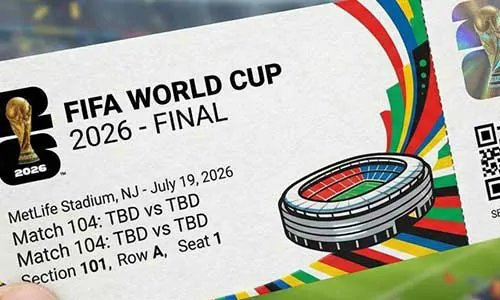
Table of Contents
- 1. The Dawn of a New Era: Why the 48-Team Expansion?
- 2. Group Stage Restructuring and the 48-Team Layout
- 3. Determining the Best Third-Place Teams
- 4. The Expanded Knockout Stage: Road to the Final
- 5. Essential Rule Changes and IFAB Regulations
- 6. Advanced VAR Powers and Refereeing Directives
- 7. Key Differences Between 2022 and 2026 Formats
- 8. Logistics and Travel Challenges of United 2026
- 9. Frequently Asked Questions (FAQ)
The global football landscape is witnessing its most dramatic evolution in decades. With the tournament currently underway across Canada, Mexico, and the United States, fans and analysts are adapting to an entirely new competitive landscape. If you are looking to make sense of this massive tournament, this complete guide on the FIFA World Cup 2026 Explained: Expansion Format and New Regulations will break down everything you need to know, from the 48-team layout to the latest strict refereeing guidelines.
Indeed, this tournament is unlike any edition that came before it. Not only has the participant list expanded, but the entire matchday experience, progression math, and officiating structures have undergone severe changes. Therefore, understanding these adjustments is key to enjoying the action and predicting which country will raise the famous trophy on July 19, 2026.
The Dawn of a New Era: Why the 48-Team Expansion?
For several decades, the 32-team format was considered the gold standard of international football. However, the decision by FIFA to transition to a 48-team tournament represents a deliberate push toward global inclusivity. By granting more qualification slots to underrepresented confederations, rising football nations now have a historic opportunity to compete on the grandest stage of all. For instance, countries that previously struggled to break through tough regional qualifiers can now showcase their talent globally.
Furthermore, the choice of three host nations—the United States, Canada, and Mexico—provides the massive infrastructure required to support this expanded tournament. With 16 world-class venues hosting matches, the geographical footprint of the event is unparalleled. To fully grasp these changes, having the FIFA World Cup 2026 Explained: Expansion Format and New Regulations clear in your mind is essential to navigating this multi-country spectacle.
Critics initially argued that expanding the tournament might dilute the overall quality of the matches. On the other hand, proponents emphasize that giving smaller nations access to elite competition accelerates the development of the sport worldwide. Consequently, this expansion is not just about more matches; it is about building a truly global game.
Deep Dive into the FIFA World Cup 2026 Explained: Expansion Format and New Regulations
The most radical structural change in this tournament is the group stage configuration. Initially, FIFA proposed a format consisting of 16 groups of three teams. However, this proposal faced heavy backlash due to concerns over collusion on the final matchday—often referred to as the “Disgrace of Gijón” scenario. To safeguard competitive integrity, FIFA ultimately opted for 12 groups of four teams each.
As a result, each team is guaranteed at least three group-stage matches, maintaining the traditional competitive pressure. Under this setup, a total of 72 group-stage matches are played, creating an intense schedule for viewers worldwide. To see the official match schedules and ticketing information, you can visit the official FIFA website.
Moreover, the progression criteria have shifted dramatically. In past tournaments, the equation was simple: finish in the top two or go home. Today, the inclusion of 48 teams introduces a brand-new calculation. Under the FIFA World Cup 2026 Explained: Expansion Format and New Regulations, the top two teams from each of the 12 groups qualify automatically, leaving eight slots to be filled by the best third-place finishers across the entire tournament.
Determining the Best Third-Place Teams
Because only eight of the twelve third-place teams can advance to the knockout stage, a complex ranking matrix is utilized. This system compares the records of all third-place teams across different groups. Consequently, teams can no longer afford to play defensively in their final group match, as every single goal could determine whether they qualify or face elimination.
By having the details of the FIFA World Cup 2026 Explained: Expansion Format and New Regulations, coaches can calculate the precise risk-reward ratio of pushing for a late winner. The ranking criteria for third-place teams are applied in the following strict order:
| Priority | Criterion | Description |
|---|---|---|
| 1 | Total Points | The absolute number of points earned (3 for a win, 1 for a draw). |
| 2 | Goal Difference | Total goals scored minus total goals conceded in all group matches. |
| 3 | Goals Scored | The total number of goals scored in the group stage. |
| 4 | Fair Play Points | The team conduct score, penalizing yellow and red cards. |
| 5 | FIFA World Ranking | The official FIFA ranking list prior to the tournament. |
Therefore, even a minor disciplinary infraction, like an unnecessary yellow card for arguing with a referee, could theoretically eliminate a nation from the tournament. This makes discipline and strategic planning more critical than ever before.
The Expanded Knockout Stage: Road to the Final
Once the group stage concludes, the tournament shifts gears into the single-elimination knockout phase. Because of the team expansion, the knockout bracket now starts with 32 teams instead of 16. This means an entire extra round of high-stakes, win-or-go-home matches has been introduced to the schedule.
When studying the brackets of the FIFA World Cup 2026 Explained: Expansion Format and New Regulations, one notices how the path to glory is now longer. To win the World Cup, the final two teams must play a total of eight matches instead of the traditional seven. This extra match places an immense physical demand on players, especially coming at the end of an exhausting domestic club season.
Consequently, squad depth is no longer a luxury—it is an absolute necessity. Managers must rotate their players effectively to prevent muscle injuries and maintain tactical intensity over the 39-day tournament. Teams with a strong bench will hold a distinct advantage during the latter stages of the competition.
Essential Rule Changes: FIFA World Cup 2026 Explained: Expansion Format and New Regulations
To keep the game moving and eliminate frustrating delays, the International Football Association Board (IFAB) has authorized several strict new guidelines for this tournament. Chief among these is the new 10-second substitution rule. Under this regulation, any player being substituted must leave the field within 10 seconds of their number being shown on the board.
If a player fails to comply and deliberately walks slowly to waste time, they will face swift disciplinary action. This rule is designed to eliminate the common tactic of players walking slowly across the entire length of the pitch to secure a narrow lead. To keep up with analyzing these updates, check out the comprehensive rules coverage on Fox Sports.
In addition, referees are instructed to enforce strict limits on the time taken for throw-ins and goal kicks. Players who delay restarts will be cautioned immediately, reflecting FIFA’s goal of maximizing active playing time and keeping the tempo high for spectators.
Furthermore, tactical timeouts have been banned. While hydration and cooling-off breaks are still permitted during matches played under extreme heat, coaches are strictly forbidden from using these intervals to conduct tactical board sessions or long team talks. The focus remains entirely on keeping the action flowing naturally.
Advanced VAR Powers and Refereeing Directives
Within the broader scope of the FIFA World Cup 2026 Explained: Expansion Format and New Regulations, technological updates play a massive role. The Video Assistant Referee (VAR) system has been upgraded to prevent critical mistakes that can ruin a team’s campaign. VAR can now intervene in cases of mistaken identity, and check second yellow card errors, ensuring no player is wrongly sent off the pitch.
Furthermore, the protocol for penalty kicks has been clarified, specifically regarding the accidental double touch rule. If a penalty taker slips and accidentally touches the ball a second time before another player has touched it, and the ball goes into the net, the goal is disallowed. Instead, play is restarted with an indirect free kick for the defending team. This clears up years of controversy surrounding accidental slips during crucial penalty shootouts.
Additionally, referees are enforcing a strict “captain-only” dialogue policy. If multiple players crowd or protest a referee’s decision, they will face immediate yellow cards. Only the team captain is permitted to approach the official to discuss a ruling, restoring order and respect to the pitch.
Comparing the 2022 and 2026 Formats
To fully grasp how massive this tournament is, it helps to compare it directly to the previous edition in Qatar. The shift in numbers is staggering and highlights why this is the biggest sports event in history.
| Feature | 2022 World Cup (Qatar) | 2026 World Cup (United 2026) |
|---|---|---|
| Total Teams | 32 Teams | 48 Teams |
| Total Matches | 64 Matches | 104 Matches |
| Group Configuration | 8 Groups of 4 Teams | 12 Groups of 4 Teams |
| Knockout Stage Start | Round of 16 | Round of 32 |
| Matches to Reach Final | 7 Matches | 8 Matches |
| Host Nations | 1 Host (Qatar) | 3 Hosts (USA, Canada, Mexico) |
| Tournament Duration | 29 Days | 39 Days |
This side-by-side view shows that the tournament has grown in size and complexity. Therefore, teams must adjust their travel schedules, tactical preparation, and squad rotations to cope with the increased duration and match count.
The Logistics and Travel Challenges of United 2026
Unlike Qatar, where stadiums were located within a small radius, the 2026 tournament spans an entire continent. Flying from Vancouver to Mexico City or Miami involves multiple time zones and varying climate conditions. Consequently, player fatigue and recovery times are major factors that can influence the outcome of matches.
To combat this, FIFA has grouped matches into regionalized clusters. During the group stage, teams are assigned to the West, Central, or East regions. This smart setup reduces travel times, keeping flights short and giving players more time to recover between games.
Ultimately, the strategic logistics of the FIFA World Cup 2026 Explained: Expansion Format and New Regulations show that winning the trophy requires off-field excellence as much as on-field talent. The nations that handle travel logistics and player recovery best are likely to go furthest in the tournament.
FIFA World Cup 2026 Explained: Expansion Format and New Regulations – FAQ Section
Q1: How many teams are playing in the 2026 World Cup?
A1: There are 48 teams competing in the 2026 tournament, which is a major expansion from the previous 32-team format.
Q2: How does the 12-group format work?
A2: The 48 teams are divided into 12 groups of four. The top two teams from each group, along with the eight best third-place teams, advance to the Round of 32.
Q3: What is the new Round of 32 in the knockout stage?
A3: It is an additional knockout round introduced before the Round of 16. This means teams must win one extra single-elimination match to reach the final.
Q4: How are the best third-place teams decided?
A4: They are ranked based on total points, goal difference, goals scored, fair play conduct points, and finally, their FIFA World Ranking.
Q5: What are the key rule changes regarding substitutions and VAR?
A5: Major rule changes include a 10-second substitution exit rule, stricter anti-timewasting measures, and expanded VAR review powers for second yellow cards and mistaken identities.
Embracing the Future of Football
In summary, the FIFA World Cup 2026 Explained: Expansion Format and New Regulations represents a massive leap forward for the global game. While the sheer scale of the event brings logisitcal challenges, the excitement of seeing more nations compete on the world stage is unmatched. These new rules and formats are designed to keep matches fast, fair, and incredibly competitive.
What are your thoughts on these historic updates? Do you prefer the old 32-team format, or are you excited about the expansion? Let us know in the comments section below, and don’t forget to share this guide with your fellow football fans!