False 9 Explained: Role, Tactical Impact and Legendary Players
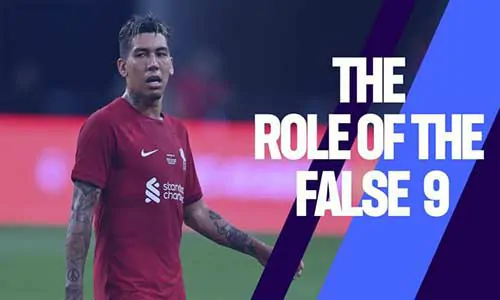
Modern football tactics are constantly changing, with managers regularly reimagining player positions to gain a competitive edge. Among these tactical innovations, few concepts have captivated analysts and fans quite like the “False 9.” To fully comprehend how modern systems break down deep defensive blocks, a close examination of this unique role is essential. In this comprehensive guide, we present the False 9 Explained: Role, Tactical Impact and Legendary Players to show how this position has redefined attacking football.
Historically, the center-forward was expected to stay high up the pitch, battle physical center-backs, and act as the focal point of the attack. However, the False 9 subverts these traditional expectations by dropping deep into midfield. This movement creates massive tactical dilemmas for opposing defenders, who must decide whether to follow the player or maintain their defensive line. Consequently, this simple movement can completely dismantle a team’s defensive structure.
Table of Contents
- Understanding the Basics: What is a False 9?
- The Historical Evolution of the Role
- False 9 Explained: Role, Tactical Impact and Legendary Players in Action
- Tactical Impact: How the False 9 Manipulates Opposing Defenses
- Key Attributes of a Successful False 9
- Legendary Players Who Mastered the Position
- Comparing the False 9 with Traditional Attacking Roles
- How Managers Counter the False 9 System
- Conclusion and Tactical Outlook
- Frequently Asked Questions (FAQs)
Understanding the Basics: What is a False 9?
In simple terms, a False 9 is an unconventional center-forward who regularly drops deep into the space between the opposition’s midfield and defensive lines. Instead of playing on the shoulder of the last defender, this player operates in “Zone 14″—the crucial creative area just outside the penalty box. By doing so, they drag opposing center-backs out of position, opening up valuable space for quick wingers or advancing midfielders to exploit.
Furthermore, this positioning creates a numerical superiority in the center of the pitch. Instead of a standard 3v3 battle in midfield, the dropping forward creates a 4v3 advantage. This makes it significantly easier for the attacking team to retain possession, dictate the tempo of the game, and patiently probe for defensive openings.
Conversely, a traditional number 9 relies heavily on physical presence, aerial ability, and clinical finishing inside the box. While the False 9 must also be capable of scoring, their primary responsibility is to facilitate play and create space for teammates. Therefore, they act as a hybrid between a traditional striker and a classic playmaker.
The Historical Evolution of the Role
While many modern fans associate this role with Pep Guardiola’s era-defining Barcelona team, its origins can be traced back much further. In the 1930s, the Austrian “Wunderteam” utilized Matthias Sindelar in a fluid role that baffled traditional defenses. Sindelar, known for his slight build and intellect, refused to engage in physical battles with robust defenders, choosing instead to drift across the pitch to collect the ball.
Later, in the 1950s, the legendary Hungarian national team perfected this concept with Nándor Hidegkuti. Operating as a deep-lying center-forward, Hidegkuti was central to Hungary’s famous 6-3 victory over England at Wembley in 1953. The English defenders, accustomed to marking stationary strikers, did not know how to handle his deeper positioning, which allowed Hungary to dominate the match.
In the mid-2000s, AS Roma coach Luciano Spalletti revived the concept out of necessity due to injuries, deploying Francesco Totti as a lone forward who regularly dropped deep. This tactical adjustment laid the groundwork for the modern interpretation of the position, which would soon reach its absolute peak on the global stage under Pep Guardiola.
False 9 Explained: Role, Tactical Impact and Legendary Players in Action
When analyzing the False 9 Explained: Role, Tactical Impact and Legendary Players, it becomes clear that this position is not just about one player’s movement. Rather, it is a highly coordinated team system that requires precise timing, spatial awareness, and fluid rotations from multiple players on the pitch.
To understand why this system is so difficult to defend against, we must look at the psychological and tactical dilemma it presents to opposing center-backs. When the striker drops into midfield, the defender faces a difficult choice:
- Option A: Follow the striker. If the center-back follows the False 9 into midfield, they leave a massive gap in the defensive line. Fast wingers can immediately exploit this space via diagonal runs.
- Option B: Stay in position. If the center-back refuses to follow, the False 9 is left completely unmarked in midfield. This allows them to turn, face the defense, and play defense-splitting passes.
Consequently, the opposition’s defensive block is forced to stretch and compress in unnatural ways, leading to defensive breakdowns and communication errors that a well-drilled attacking unit can exploit with ease.
Why False 9 Explained: Role, Tactical Impact and Legendary Players Matters Today
In modern football, space is incredibly limited. Most defensive teams employ low blocks, packing their penalty box with defenders to deny space to attackers. As a result, traditional strikers can find themselves isolated and starved of service.
This is where the principles of False 9 Explained: Role, Tactical Impact and Legendary Players become incredibly valuable. By drawing defenders out of their preferred defensive lines, the False 9 acts as a key to unlock even the most stubborn defensive systems. It transforms static attacking lines into dynamic, unpredictable units that are exceptionally difficult to prepare for during training sessions.
Tactical Impact: How the False 9 Manipulates Opposing Defenses
The tactical impact of a False 9 goes far beyond simply passing the ball. One of its primary benefits is the creation of overloads. In football, an overload occurs when one team has more players in a specific area of the pitch than their opponent. By dropping into midfield, the False 9 assists the midfielders in maintaining possession, frustrating opponents, and running down the clock when necessary.
Additionally, this movement allows the wingers to act as the primary goalscorers. Instead of staying wide to cross the ball to a target man, the wingers make diagonal inside runs (often referred to as “inverted wingers”) into the space vacated by the center-back. Excellent examples of this were seen at Barcelona with Thierry Henry and Lionel Messi, and later at Liverpool with Sadio Mané, Mohamed Salah, and Roberto Firmino.
Finally, the False 9 improves a team’s counter-pressing capabilities. Because the player is already positioned in midfield when possession is lost, they are perfectly placed to immediately press the opponent’s defensive midfielders, preventing quick counter-attacks and winning the ball back high up the pitch.
Key Attributes of a Successful False 9
Not every striker has the tactical intelligence or technical ability to play this challenging role. In fact, playing as a False 9 requires an incredibly diverse skillset that combines the attributes of a creative midfielder with the instincts of a clinical striker.
- Elite Spatial Awareness: The player must constantly scan the pitch to identify where the space is, where the defenders are, and where their teammates are running.
- Superb First Touch and Passing: Because they operate in highly congested areas of the pitch, they need an impeccable first touch to keep the ball under pressure and the vision to execute precise passes.
- Dribbling and Press Resistance: They must be comfortable receiving the ball with their back to goal, shielding it from physical defenders, and turning quickly into space.
- Tactical Discipline: The player must resist the natural urge to always run toward the goal, understanding that their movement away from the goal is what actually creates scoring opportunities for the team.
Legendary Players Who Mastered the Position
To truly understand how this role works in practice, we must look at the legendary figures who have defined and refined the position over the years. These players did not just play the role; they set the standard for how future generations would be judged.
Lionel Messi: The Ultimate Modern Interpreter
During the 2008/2009 season, Pep Guardiola made a tactical decision that would change the course of football history. In a crucial El Clásico match against Real Madrid, Guardiola moved Lionel Messi from the right wing to the center as a False 9. The result was a stunning 6-2 victory for Barcelona, exposing major flaws in Madrid’s defensive setup.
Messi’s low center of gravity, extraordinary dribbling ability, and vision made him the perfect fit for the role. He went on to score a record-breaking 73 goals in the 2011/2012 season, demonstrating that a False 9 could be just as prolific—if not more so—than a traditional center-forward.
Francesco Totti: Roma’s Gladiator in the Hole
Before Messi’s rise, Francesco Totti redefined the role in Italy under Luciano Spalletti. In a fluid 4-6-0 formation, Totti had the freedom to drop deep, link up play, and unleash powerful long-range shots. His physical strength, combined with his delicate passing ability, proved that a False 9 did not have to be small and agile; they simply needed the intelligence to exploit space.
Roberto Firmino: The Defensive Workhorse
Under Jürgen Klopp at Liverpool, Roberto Firmino reinterpreted the role by adding defensive work rate to its core responsibilities. Firmino was not only the creative hub that allowed Salah and Mané to score dozens of goals; he was also Liverpool’s first line of defense. His relentless pressing and tactical selflessness made him one of the most respected players in Premier League history, showing that the role could be adapted to fit high-energy pressing systems.
Comparing the False 9 with Traditional Attacking Roles
To better understand how the False 9 differs from other attacking positions, it is helpful to look at their primary objectives, movements, and key attributes side-by-side.
| Attacking Role | Primary Tactical Movement | Key Tactical Objective | Essential Attributes |
|---|---|---|---|
| False 9 | Drops deep into midfield / Zone 14 | Create overloads, drag center-backs out, assist playmaking | Vision, passing, spatial awareness, press resistance |
| Target Man | Stays high, acts as a physical reference point | Win aerial duels, hold up play, physical battles | Strength, heading, hold-up play, aerial dominance |
| Poacher | Plays on the shoulder of the last defender | Exploit defensive lines, score with minimal touches | Acceleration, clinical finishing, positioning |
This comparison shows that while traditional roles prioritize direct goalscoring actions, the False 9 is highly focused on collective team play, spatial manipulation, and possession control.
How Managers Counter the False 9 System
As with any tactical innovation, defensive coaches eventually developed effective strategies to counter the False 9. One common approach is the use of a “low block.” By defending very deep and keeping the space between the midfield and defensive lines compact, defenders deny the False 9 the space they need to operate.
Another popular strategy is employing a dedicated defensive midfielder—often called a “destroyer” or “pivot.” Instead of forcing a center-back to step out of the defensive line, this defensive midfielder is tasked with marking the False 9 whenever they drop deep. Players like Casemiro, N’Golo Kanté, and Rodri have excelled at neutralizing False 9s by disrupting their rhythm and denying them time to turn on the ball.
Finally, some managers instruct their central defenders to use strict zonal marking rather than man-marking. By defending spaces rather than specific players, the defenders maintain their shape, refusing to be dragged out of position by the striker’s decoy runs.
Conclusion and Tactical Outlook
In summary, the False 9 remains one of the most sophisticated and intellectually stimulating positions in modern football. By prioritizing space, movement, and collective intelligence over physical battles, it has changed how managers structure their attacks and how defenders organize their lines.
Whether you are coaching a youth team, playing football simulation games, or simply analyzing your favorite club’s tactical approach, understanding these principles is key to appreciating the depth of modern football. To explore more advanced tactical concepts, you can check out detailed analyses on reputable platforms like The Coaches’ Voice or tactical breakdowns on The Athletic.
What are your thoughts on this tactical setup? Do you prefer a team that uses a creative False 9, or do you still appreciate the classic, physical presence of a traditional target man? Let us know in the comments below, and share this article with your fellow football fans!
Frequently Asked Questions (FAQs)
1. Can any creative midfielder play as a False 9?
While creative midfielders possess the necessary passing and vision, playing as a False 9 also requires the physical capacity to shield the ball from physically imposing center-backs, as well as the instinct to make runs into the box when the opportunity arises. Therefore, only a select group of players can make this transition successfully.
2. Who was the first player to play as a False 9?
Although the modern term was popularized during Pep Guardiola’s tenure at Barcelona, historical analyses suggest that Matthias Sindelar of the Austrian “Wunderteam” in the 1930s and Nándor Hidegkuti of Hungary in the 1950s were among the earliest precursors to the modern False 9.
3. Why don’t more teams use a False 9?
Implementing a False 9 system requires highly intelligent wingers who know exactly when to make diagonal runs to exploit the space. Without these fluid off-the-ball movements and a high level of technical ability across the team, the system can become stagnant and struggle to produce goals.
4. How does a False 9 differ from an attacking midfielder (Number 10)?
An attacking midfielder starts behind the forward line and looks to push forward into the box or assist strikers. In contrast, a False 9 starts as the lone striker on the team sheet and drops backward into the midfield, creating a distinct pulling effect on the opposition’s defensive line.
5. Is the False 9 role still popular in modern football?
Yes, the role remains popular, although it continues to evolve. Many modern coaches use “hybrid” strikers who can act as a traditional target man in some phases of play and drop deep like a False 9 in others, keeping opposing defenders guessing throughout the match.
6. Did Cristiano Ronaldo ever play as a False 9?
Cristiano Ronaldo has occasionally played in central attacking roles, but his style is generally more suited to that of an inside forward or a highly mobile, clinical center-forward. He relies more on explosive pace, movement into the box, and clinical finishing rather than dropping deep to dictate the team’s passing tempo.