Estadio Azteca and FIFA World Cup 2026: A Historic Stadium’s New Chapter
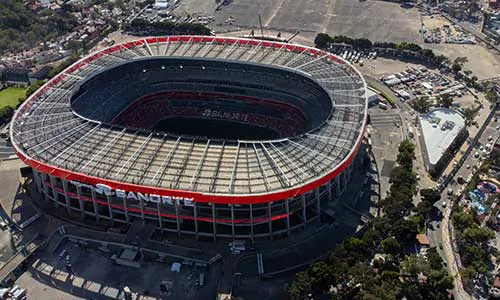
Table of Contents
- 1. The Historical Legacy of the Colossus of Santa Úrsula
- 2. Estadio Azteca and FIFA World Cup 2026: A Historic Stadium’s New Chapter
- 3. The Comprehensive Renovation: Merging History with Modernity
- 4. The Architectural Vision Behind the Renovation
- 5. The 2026 Match Schedule at Estadio Azteca
- 6. Experiencing the Matches: Atmosphere, Altitude, and Culture
- 7. Frequently Asked Questions (FAQ)
- 8. Conclusion: A Timeless Cathedral of Football
Few sporting arenas on Earth possess a soul as profound as Mexico City’s legendary Colossus of Santa Úrsula. This legendary ground, famously known as the home of Mexican football, is writing a new narrative with the ongoing tournament. Indeed, Estadio Azteca and FIFA World Cup 2026: A Historic Stadium’s New Chapter represents the perfect blend of rich footballing heritage and cutting-edge modernity. Having witnessed some of the most iconic moments in athletic history, the stadium is once again under the global spotlight as it undergoes a monumental evolution.
As fans gather from across the globe, the relationship between Estadio Azteca and FIFA World Cup 2026 becomes a central focal point of this multi-nation tournament. To truly appreciate this modern chapter, one must understand the heavy weight of history that hangs in the thin air of Coyoacán. The concrete structure is not merely a venue; it is a sacred archive of legendary matches. Therefore, the current renovations are designed to respect the glorious past while fully preparing the site for the massive demands of the future.
Moreover, the tournament’s expanded format means the world is watching closely. With forty-eight nations competing, the logistical and emotional pressure on host stadiums has never been greater. In contrast to newer, hyper-modern arenas built from scratch, this legendary venue relies on decades of unparalleled atmosphere and character. Consequently, every upgrade serves to elevate an already electric experience to new heights.
The Historical Legacy of the Colossus of Santa Úrsula
To understand the depth of this sporting cathedral, we must look back to its inauguration in 1966. Designed by the brilliant Mexican architects Pedro Ramírez Vázquez and Rafael Mijares Alcérreca, it was engineered to be a massive theater for the beautiful game. From the beginning, the sheer scale of the venue was intended to take the breath away. When analyzing the historical context, the synergy between Estadio Azteca and FIFA World Cup 2026 is unparalleled because no other pitch has witnessed such legendary figures.
In 1970, the stadium served as the ultimate canvas for Pelé and his legendary Brazilian squad. More than one hundred thousand fans packed the stands to watch Brazil dismantle Italy 4-1 in the final. That match cemented the stadium’s place in global football lore. In addition, the tournament established a standard of play that many believe has never been surpassed. As documented by the Olympics official channel, these moments remain unmatched in the history of international sports.
Sixteen years later, in 1986, the arena became the stage for Diego Maradona’s masterclass. It was on this grass that Maradona scored the controversial “Hand of God” goal against England. Just moments later, he executed the “Goal of the Century,” dribbling past five English players to score a breathtaking solo goal. Consequently, the stadium became the only venue to host two World Cup finals featuring the two greatest players of the twentieth century.
Furthermore, the 1970 semi-final between Italy and West Germany, known as the “Game of the Century,” also unfolded here. The dramatic 4-3 extra-time finish left an indelible mark on the stadium’s legacy. Thus, when we speak of historic footballing soil, we are speaking of a place that has hosted the absolute peak of human athletic drama.
Estadio Azteca and FIFA World Cup 2026: A Historic Stadium’s New Chapter
Now, a new generation is ready to add its own pages to this glorious book. The alliance of Estadio Azteca and FIFA World Cup 2026 marks the first time a single arena has hosted matches in three different editions of the tournament. This milestone is not just a point of pride for Mexico, but a monumental moment for global football. On June 11, 2026, the stadium officially became the first venue to host three separate World Cup opening matches.
The grand opening match between Mexico and South Africa on June 11 set a spectacular tone for the entire event. It was a poetic rematch of their memorable 2010 opening encounter, drawing an electric, sold-out crowd. While the United States and Canada host their own regional games, Mexico City remains the spiritual heart of the tournament. Therefore, the eyes of billions of viewers will continue to return to this iconic bowl throughout the competition.
Moreover, the transition to a forty-eight-team format means that the logistical requirements are higher than ever before. Managing hundreds of thousands of international visitors requires world-class infrastructure. On the other hand, the stadium must retain the intimate, intimidating atmosphere that makes playing here a nightmare for visiting teams. Striking this balance is the key to ensuring this new chapter is as successful as the previous ones.
Consequently, the local organizing committee has worked tirelessly to ensure that transit, security, and accommodation match the grandeur of the matches. The surrounding neighborhood of Coyoacán has embraced this festival atmosphere. From street vendors selling traditional foods to colorful murals depicting football legends, the entire zone is a celebration of sport and culture.
The Comprehensive Renovation: Merging History with Modernity
To prepare for this historic undertaking, the stadium underwent the most comprehensive modernization project in its sixty-year history. Work began in earnest in mid-2024, forcing local giants Club América and Cruz Azul to temporarily find new homes. The goals were clear: improve spectator safety, upgrade broadcast capabilities, and implement sustainable systems. Therefore, the matches played here during Estadio Azteca and FIFA World Cup 2026 will be etched into the memory of a new generation in stunning high-definition.
One of the primary concerns was preserving the stadium’s iconic concrete architecture while introducing modern structural reinforcements. Because the venue sits in a seismically active zone, advanced structural engineering was required to support new installations. In addition, the massive new media tribunes and high-tech installations required stable, modern wiring and fiber-optic networks. This ensures that global broadcasters can transmit the matches seamlessly to every corner of the planet.
To give you a clearer idea of the immense scope of this transformation, consider the primary upgrades completed ahead of the tournament:
- Hybrid Pitch Technology: The installation of a cutting-edge hybrid grass system to withstand intense tournament play.
- Acoustic Canopy Ring: A spectacular metal and glass ring added to the roof to shield fans and amplify crowd noise.
- Sustainability Upgrades: Integration of advanced rainwater harvesting systems and low-energy LED floodlighting throughout the arena.
- Enhanced Hospitality: Completely redesigned executive boxes and premium seating to provide an elite fan experience.
- Improved Accessibility: New ramps, elevators, and dedicated seating options to make the stadium fully inclusive for all spectators.
Moreover, the integration of modern green technologies is a massive step forward for Estadio Azteca and FIFA World Cup 2026. By reducing water usage and relying on energy-efficient lighting, the organizers have set a new benchmark for historical stadium renovations. This shows that classic venues do not need to be demolished to meet modern environmental standards.
The Architectural Vision Behind Estadio Azteca and FIFA World Cup 2026: A Historic Stadium’s New Chapter
The delicate task of redesigning this sporting temple was handed to the world-renowned architectural firm Populous, in collaboration with KMD Arquitectos. They understood that their main objective was preservation through modernization. Furthermore, security and flow management have been completely overhauled to ensure that Estadio Azteca and FIFA World Cup 2026 meets all rigorous FIFA standards. The resulting design respects the original 1966 concrete skeleton while wrapping it in modern materials.
The most visually striking update is the spectacular metal and glass roof ring. This engineered canopy is designed to shield spectators from the intense Mexico City sun and afternoon rain without blocking natural light from reaching the pitch. Additionally, the canopy acts as a massive acoustic mirror. It bounces the cheers of eighty thousand passionate fans directly back onto the field, creating an intimidating wall of sound.
In addition to structural changes, the pitch has been upgraded to hybrid grass to support the high intensity of Estadio Azteca and FIFA World Cup 2026. This state-of-the-art playing surface combines natural grass with synthetic fibers, ensuring that the field remains in perfect condition even after hosting back-to-back matches in a short period. Players can now showcase their technical skills on a surface that is both safe and exceptionally fast.
The 2026 Match Schedule at Estadio Azteca
As one of the crown jewels of this historic tournament, the stadium is hosting five high-profile fixtures. These matches bring together diverse footballing cultures from multiple continents, ensuring a festival of global sport. Indeed, local transport systems have been synchronized with Estadio Azteca and FIFA World Cup 2026 to facilitate seamless crowd movement during these massive matchdays.
According to the official match schedule released by football’s governing body, the fixtures at the stadium are distributed as follows:
| Match No. | Date (2026) | Tournament Stage | Fixture Details |
|---|---|---|---|
| Match 1 | June 11 | Group Stage (A) – Opening Match | Mexico vs South Africa |
| Match 24 | June 17 | Group Stage (K) | Uzbekistan vs Colombia |
| Match 53 | June 24 | Group Stage (A) | Czech Republic vs Mexico |
| Match 79 | June 30 | Round of 32 | To Be Determined (TBD) |
| Match 92 | July 5 | Round of 16 | To Be Determined (TBD) |
As confirmed on FIFA’s official portal, the selection of these fixtures ensures that the stadium remains at the center of the world’s sporting focus throughout the summer. The scheduling of both early group games and crucial knockout rounds provides a perfect variety of high-stakes football. Consequently, fans from around the globe will bring their local traditions, songs, and energy to the historic soil of Coyoacán.
Experiencing the Matches: Atmosphere, Altitude, and Culture
Attending a match at this legendary venue is unlike any other stadium experience in the world. Sitting at an altitude of 2,200 meters (7,200 feet) above sea level, the stadium presents a physical challenge to both players and fans. The thin air causes the ball to travel faster and move more unpredictably. As a result, visiting Estadio Azteca and FIFA World Cup 2026 will feel like a journey through both history and the future, where physical environment and sporting legacy collide.
On the other hand, traditionalists can rest easy knowing that Estadio Azteca and FIFA World Cup 2026 preserves the legendary concrete skeleton of the venue. The steep seating bowl remains intact, meaning that every fan feels incredibly close to the action, regardless of their seat. This unique layout creates a sense of vertigo that is both thrilling for spectators and intimidating for opponents.
Thus, the cultural impact of Estadio Azteca and FIFA World Cup 2026 extends far beyond the pitch itself. The stadium is surrounded by the vibrant neighborhoods of Coyoacán and Santa Úrsula Coapa, where pre-match rituals are a multi-sensory experience. From the aroma of sizzling street tacos to the rhythmic beats of local drumlines, the entire area transforms into a massive carnival on matchdays.
For international spectators, navigating Estadio Azteca and FIFA World Cup 2026 is made easy by comprehensive multilingual guides and enhanced public transport. Fans can easily ride the Metro Line 2 to the Tasqueña terminal and transfer directly to the Tren Ligero (Light Rail) to reach the stadium’s doorstep. This smooth connection minimizes traffic congestion and allows fans to focus entirely on the excitement of the match.
Similarly, the premium hospitality options developed for Estadio Azteca and FIFA World Cup 2026 offer a luxurious way to experience these historic matches. Reconfigured executive suites and premium lounges provide spectacular views of the pitch. Here, guests can enjoy world-class Mexican cuisine and international beverages while taking in the historic atmosphere.
The Fan Experience in Estadio Azteca and FIFA World Cup 2026: A Historic Stadium’s New Chapter
In contrast to newly built venues, the legendary soul of Estadio Azteca and FIFA World Cup 2026 remains its greatest asset. The physical structure acts as an organic amplifier. When tens of thousands of passionate fans join in a unison chant, the vibrations can literally be felt in the surrounding neighborhood of Santa Úrsula. Ultimately, the success of Estadio Azteca and FIFA World Cup 2026 will redefine how historic sporting venues are modernized without losing their unique cultural identity.
By hosting five key matches, the narrative of Estadio Azteca and FIFA World Cup 2026 continues to captivate football enthusiasts worldwide. Whether you are a lifelong fan or a first-time visitor, experiencing Estadio Azteca and FIFA World Cup 2026 is an absolute bucket-list opportunity that will live in your memory forever. As we watch the tournament unfold, the legacy of Estadio Azteca and FIFA World Cup 2026 is safe and sound, poised to inspire future generations of football lovers.
Frequently Asked Questions (FAQ)
The stadium (known officially as the Mexico City Stadium for the tournament) is hosting five matches in total. This includes the opening match on June 11, 2026, two group stage matches, a Round of 32 fixture, and a Round of 16 match.
The massive project focused on structural safety, digital infrastructure, spectator comfort, and sustainability. Key upgrades included a premium hybrid grass pitch, a new metal and glass canopy roof ring, reconfigured seating, modern LED floodlighting, and upgraded broadcast facilities.
It is the first stadium to host matches across three separate FIFA World Cups (1970, 1986, and 2026). It is the iconic site where Pelé lifted the trophy in 1970 and where Diego Maradona scored his historic “Hand of God” and “Goal of the Century” in 1986.
To meet strict FIFA specifications, enhance spectator safety, and accommodate expanded media and hospitality zones, the capacity was optimized to approximately 83,000 spectators.
Spectators can take Mexico City Metro Line 2 to the Tasqueña terminal station. From there, they can directly board the Tren Ligero (Light Rail) which drops them off at the Estadio Azteca station right in front of the venue.
At 2,200 meters (7,200 feet) above sea level, the thin air causes the ball to travel faster and move more unpredictably through the air. It also requires players to have elite physical conditioning to handle the lower oxygen levels.
Conclusion: A Timeless Cathedral of Football
As the tournament progresses, the Colossus of Santa Úrsula stands as a shining testament to the enduring power of sporting heritage. The modern renovations have successfully preserved the stadium’s historic soul while creating a world-class arena fit for the twenty-first century. It remains a unique cathedral of football where the ghosts of Pelé and Maradona share the stage with the modern stars of today.
This legendary venue reminds us that while technology and tactics change, the pure passion of the fans remains constant. The updated arena will continue to inspire players and spectators alike for decades to come. It is a place where history is not just remembered, but actively created with every kick of the ball.
Be Part of Football History!
Are you planning your ultimate World Cup journey or want to share your favorite memories of this legendary stadium? Join the conversation in the comments below, share this article with fellow football enthusiasts, and stay tuned for our complete matchday guides!