Box-to-Box Midfielder Explained: Duties, Skills and Tactical Importance
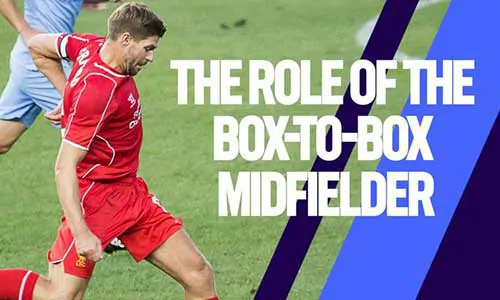
Modern football is a sport of rapid transitions, high-pressing systems, and tactical versatility. At the heart of this evolution is one of the most demanding positions on the pitch. In this comprehensive guide, we provide a complete breakdown of the role: the Box-to-Box Midfielder Explained: Duties, Skills and Tactical Importance. Whether you are a fan trying to understand tactical setups, a player looking to improve, or a coach designing a system, this analysis covers everything you need to know about the engine room of the team.
Table of Contents
- 1. What is a Box-to-Box Midfielder?
- 2. Core Duties of a Box-to-Box Midfielder
- 3. Key Skills and Physical Attributes Required
- 4. Tactical Importance in Modern Formations
- 5. Iconic Box-to-Box Midfielders: Past and Present
- 6. Midfield Roles Comparison Table
- 7. How to Train as a Box-to-Box Midfielder
- 8. Frequently Asked Questions (FAQ)
- 9. Conclusion and Tactical Outlook
What is a Box-to-Box Midfielder?
In football terminology, a box-to-box midfielder (often referred to as a “number 8”) is a central midfielder who possesses all-round abilities and is responsible for both defending and attacking. Consequently, they operate in the entire space between their own penalty box and the opponent’s penalty box. Unlike specialized defensive midfielders or dedicated playmakers, this player does not limit themselves to a single zone of the pitch.
Historically, the role emerged from the classic 4-4-2 formation, where central midfielders had to cover immense ground to prevent the team from being overrun. As tactical systems evolved, the physical and technical demands on this position grew exponentially. Today, the role represents a unique blend of defensive resilience, creative vision, and goal-scoring threat.
Furthermore, this player serves as the primary connector during transitions. When the team wins the ball deep in their half, the midfielder quickly progresses the play forward. Conversely, when possession is lost, they must immediately recover their position to support the defensive unit. For a deeper look at tactical evolutions, the analysis resources at The Coaches’ Voice offer excellent breakdowns of historical midfield roles.
Core Duties of a Box-to-Box Midfielder
To fully grasp the Box-to-Box Midfielder Explained: Duties, Skills and Tactical Importance, we must dissect what these athletes do during a 90-minute match. Their duties are divided into three distinct phases of play: defensive protection, transitional progression, and attacking penetration.
1. Defensive Duties
When the opposition has the ball, the midfielder acts as the first line of central defense. They must actively press opponents, cover passing lanes, and support the defensive midfielder. Key defensive responsibilities include:
- Sustained Pressing: Initiating or joining the press to force turnovers in the middle third of the pitch.
- Tracking Runners: Following opposing midfielders who make late runs into the penalty box.
- Winning Duals: Engaging in ground and aerial duels to disrupt the opponent’s build-up play.
- Covering Full-backs: Shifting wide to cover space when full-backs join the attack.
2. The Transition Phase
Transition is where the elite box-to-box midfielder truly shines. Upon winning possession, they must quickly decide whether to carry the ball forward or distribute it to creative players. Their primary duties during transition are:
- Ball Progression: Carrying the ball past the opponent’s first line of pressure using dribbling skills.
- Relieving Pressure: Acting as an available passing option for defenders under heavy pressure.
- Quick Distribution: Delivering precise long or short passes to wingers and forwards.
3. Attacking Contributions
In the attacking third, these players act as an extra attacking threat. Because they start deep, their runs into the box are incredibly difficult for opposing defenders to track. Their attacking duties include:
- Late Runs into the Box: Arriving late to meet crosses or loose balls near the penalty spot.
- Overloading the Half-Spaces: Creating numerical advantages in wide areas to break down low blocks.
- Long-Range Shooting: Testing the goalkeeper from outside the penalty area when opposing defenses drop deep.
Key Skills and Physical Attributes Required
Playing this position requires an extraordinary balance of physical, technical, and mental attributes. Without this complete skill set, a player can easily become a liability, leaving gaps in midfield that opponents can exploit.
Physical Dominance
First and foremost, supreme physical conditioning is non-negotiable. An elite player covers between 11 to 13 kilometers per match. Therefore, they must possess high aerobic capacity, stamina, and recovery speed. In addition to endurance, physical strength is required to shield the ball, win physical duels, and withstand challenges in tight areas.
Technical Proficiency
Because they operate in all areas of the pitch, their technical skills must be flawless. They must be able to pass accurately under pressure, control difficult balls instantly, and shoot effectively. Excellent dribbling ability is also crucial, as it allows them to break defensive lines through direct carries. A high-quality pass completion rate, combined with progressive distance gained, is the hallmark of modern technical metrics.
Tactical and Mental Intelligence
Tactical discipline is perhaps the most underrated aspect of the role. A player must continuously scan the pitch to assess positioning. If they push forward too early, they risk exposing their defense to a counter-attack. On the other hand, if they remain too deep, the forwards will lack support. Consequently, spatial awareness, decision-making, and anticipation are vital components of their overall mental toolkit.
Tactical Importance in Modern Formations
Tactical setups are constantly shifting, but the need for a dynamic box-to-box midfielder remains constant. Let us analyze how different formations leverage this profile to gain a tactical edge over their opponents.
The 4-3-3 System
In a standard 4-3-3 formation, the midfield trio usually consists of a defensive anchor (number 6), a creative playmaker (number 10/8), and a dynamic box-to-box presence. Here, the player acts as the “shuttler.” They balance the midfield by helping the defensive midfielder protect the central zone, while also making timely forward runs to support the front three. This dual responsibility prevents the team from becoming tactically unbalanced.
The 4-2-3-1 Formation
Within a 4-2-3-1 system, this player typically operates in the double pivot alongside a deep-lying playmaker or defensive specialist. While one player remains static to protect the center-backs, the dynamic partner is given the license to roam forward. This partnership provides defensive stability while ensuring the attacking midfielder (number 10) is not isolated during build-up play.
The 3-5-2 and Wing-back Systems
In formations utilizing three center-backs, central midfielders must cover substantial horizontal and vertical ground. The box-to-box player is responsible for shifting wide to support wing-backs, while also occupying central spaces. Consequently, their work rate determines whether the formation functions as an offensive threat or drops into an excessively defensive shape. To explore detailed tactical reports on these systems, you can read analysis updates on UEFA’s Official Technical Reports.
Iconic Box-to-Box Midfielders: Past and Present
To fully appreciate the Box-to-Box Midfielder Explained: Duties, Skills and Tactical Importance, it is helpful to look at the players who have mastered the role throughout football history. Different eras have produced unique variations of this profile.
Steven Gerrard (Liverpool & England)
Steven Gerrard is widely considered the ultimate modern archetype. He possessed incredible stamina, a ferocious tackle, precise passing range, and a legendary ability to score crucial goals from distance. His leadership and physical capacity allowed him to carry his team single-handedly during transition phases.
Yaya Touré (Manchester City & Ivory Coast)
Yaya Touré combined unstoppable physical power with delicate technical skill. During his prime, he could pick up the ball deep in his own half, shrug off opposing players, drive past the midfield line, and finish with clinical precision. His 20-goal Premier League season in 2013/14 remains a benchmark for midfield goal-scoring.
Jude Bellingham (Real Madrid & England)
Jude Bellingham represents the modern evolution of the position. He possesses the maturity, physical profile, and tactical intelligence to dominate games at both ends of the pitch. His exceptional ability to read space allows him to make devastating forward runs while maintaining high defensive work rates.
Federico Valverde (Real Madrid & Uruguay)
Federico Valverde is characterized by his relentless energy and tactical flexibility. Whether playing in a central trio or drifting wide to support the attack, his high-speed running and recovery capability make him indispensable for maintaining defensive organization under pressure.
Midfield Roles Comparison Table
To help visualize how the box-to-box role differs from other midfield profiles, review the analytical comparison table below:
| Midfield Role | Primary Zone | Defensive Output | Attacking Contribution | Key Characteristic |
|---|---|---|---|---|
| Box-to-Box (No. 8) | Entire Pitch | High (Pressing & Tackling) | High (Late runs, Shooting) | Endless Stamina & Versatility |
| Defensive Midfielder (No. 6) | Defensive Third | Extreme (Interceptions, Blocks) | Low (Simple distribution) | Positioning & Tactical Discipline |
| Deep-Lying Playmaker | Middle/Lower Third | Medium (Interceptions) | High (Long-range passing) | Vision & Passing Range |
| Attacking Midfielder (No. 10) | Attacking Third | Low (Basic pressing) | Extreme (Assists, Dribbling) | Creativity & Spatial Awareness |
How to Train as a Box-to-Box Midfielder
If you aim to excel in this role, your training program must target multiple aspects of athletic performance. Developing the necessary physical and technical foundations requires focused, consistent preparation.
1. High-Intensity Interval Training (HIIT)
Traditional long-distance jogging is insufficient for the demands of modern football. Instead, focus on high-intensity interval training. Incorporate shuttle runs, directional changes, and explosive sprints followed by brief recovery periods. This specific conditioning replicates the physical demands of tracking back and joining counter-attacks.
2. Scanning and Awareness Drills
Before receiving the ball, you must know where your teammates and opponents are positioned. Practice scanning drills where you turn your head every 2 to 3 seconds before taking a pass. This cognitive habit improves your decision-making speed, allowing you to move the ball quickly in congested areas.
3. Transition Exercises
Design training drills that require you to transition instantly from defense to attack. For instance, practice winning a tackle, immediately lifting your head, and delivering a 30-yard diagonal pass to a winger, followed by an immediate run to support the attack.
Frequently Asked Questions (FAQ)
What is the difference between a number 8 and a number 10 midfielder?
A number 8 is a box-to-box midfielder who balances both defensive duties and attacking contributions across the entire pitch. Conversely, a number 10 operates primarily in the final third, focusing on creativity, key passes, and direct goal-scoring opportunities with fewer defensive responsibilities.
Why is the box-to-box midfielder so important in modern football?
Modern football relies heavily on transitions and pressing. Having a player who can defend robustly and immediately transform into an extra attacking threat provides teams with tactical flexibility and numerical advantages in crucial zones.
Who is the best box-to-box midfielder of all time?
While opinion varies, players like Steven Gerrard, Lothar Matthäus, Patrick Vieira, and Roy Keane are frequently cited as historic benchmarks due to their complete technical profiles and physical dominance.
Can a defensive midfielder play as a box-to-box midfielder?
Yes, provided they possess the required aerobic capacity, ball progression skills, and attacking instincts. However, some defensive midfielders lack the offensive vision or speed needed to impact the game in the opponent’s penalty box.
What formations best suit a box-to-box midfielder?
The 4-3-3, 4-2-3-1, and 3-5-2 formations are ideal, as they provide structural support that allows the player the freedom to roam forward without exposing the defensive line.
Conclusion and Tactical Outlook
To summarize, the role of the midfielder is one of the most physically demanding and tactically vital components of a successful football team. By combining defensive resilience with attacking instincts, these players serve as the engine that drives transitions and maintains team balance.
As tactical trends continue to emphasize high pressing and rapid transitions, the demand for highly versatile central players remains strong. Managers will continue to build their tactical systems around individuals who can cover substantial ground, progress the ball, and contribute to both phases of play.
What are your thoughts on the modern evolution of this role? Who do you think is currently the best player operating in this position? Let us know your opinions in the comments section below, and share this article with fellow football enthusiasts to keep the tactical discussion going.