Ballon d’Or Winners Ranked: Players with the Most Awards
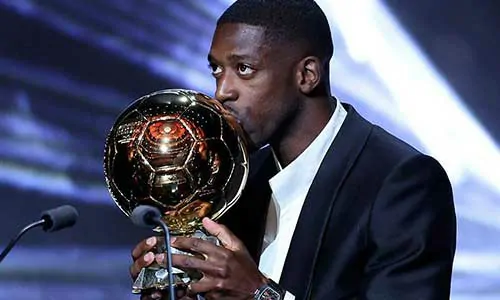
The Ballon d’Or remains the most prestigious individual accolade in world football. Established by the French news magazine France Football in 1956, this golden ball represents the absolute pinnacle of individual sporting success. Over the decades, only a select group of legendary players have had the privilege of lifting this trophy, and an even smaller elite have done so multiple times. In this comprehensive guide, we present the definitive list of Ballon d’Or Winners Ranked: Players with the Most Awards, analyzing their historic achievements, key statistics, and legacy within the sport.
Understanding the history of this award requires looking at how the voting criteria and eligibility have evolved. Initially, only European players playing in European leagues were eligible. This rule changed in 1995 to include any player at a European club, and later in 2007, it became a global award. Consequently, when looking at the historical record of Ballon d’Or winners ranked: players with the most awards, we witness a fascinating narrative of tactical shifts, national dominance, and individual rivalries that have defined different eras of the beautiful game.
Table of Contents
- The Evolution of the Ballon d’Or
- Ballon d’Or Winners Ranked: Players with the Most Awards
- 1. Lionel Messi – 8 Awards
- 2. Cristiano Ronaldo – 5 Awards
- 3. The Three-Time Winners Club
- 4. Iconic Double Winners
- All-Time Multiple Winners Comparison Table
- How Eras and Rule Changes Shaped the Leaderboard
- The Future: Who Will Join the Elite?
- Frequently Asked Questions
The Evolution of the Ballon d’Or
Before diving into the detailed rankings, it is essential to establish the context of how this award is judged. For decades, journalists solely determined the winner. Today, the voting panel consists of specialized media representatives from the top 100 countries in the FIFA men’s rankings. This adjustment ensures a globally balanced perspective, minimizing regional bias and focusing strictly on individual performance, team success, and fair play during the designated season.
Furthermore, the transition from calendar-year evaluations to season-based performance (August to July) has drastically changed how players prepare and peak for major tournaments. For example, international tournaments like the FIFA World Cup, UEFA Euros, and Copa América now play a highly concentrated role in determining the final recipient. Consequently, compiling a list of Ballon d’Or winners ranked: players with the most awards reveals how international achievements often tip the scale in favor of certain footballing icons.
Ballon d’Or Winners Ranked: Players with the Most Awards
The leaderboard of multiple-time winners is a exclusive list of football royalty. While dozens of players have won the award once, only a tiny percentage have successfully defended their crown or recaptured it years later. Below, we break down the players who have won the most Ballon d’Or awards in football history.
1. Lionel Messi (8 Awards)
Lionel Messi stands alone at the apex of football history. With eight Ballon d’Or awards spanning three different decades (2009, 2010, 2011, 2012, 2015, 2019, 2021, and 2023), the Argentine playmaker has set a benchmark that may never be surpassed. His journey began under Pep Guardiola at Barcelona, where he pioneered the “False 9” role, leading to an unprecedented four consecutive awards between 2009 and 2012.
Messi’s eighth title in 2023 was primarily secured by his legendary performance at the 2022 FIFA World Cup in Qatar. Leading Argentina to victory as the tournament’s best player, Messi solidified his status as the ultimate icon of modern football. His unique combination of dribbling, playmaking, and prolific goalscoring has made him a permanent fixture in any discussion of Ballon d’Or winners ranked: players with the most awards.
2. Cristiano Ronaldo (5 Awards)
No player has pushed Lionel Messi harder, nor achieved such sustained excellence, as Cristiano Ronaldo. The Portuguese superstar has claimed the trophy five times (2008, 2013, 2014, 2016, and 2017). Ronaldo won his first award with Manchester United after a remarkable UEFA Champions League-winning campaign in 2007-08, before embarking on a historic goalscoring run with Real Madrid.
Ronaldo’s dominance was characterized by his incredible athleticism, clinical finishing, and unmatched clutch performances in European knockout matches. By leading Real Madrid to three consecutive Champions League titles, he secured multiple Ballons d’Or, establishing a fierce decade-long rivalry with Messi that elevated the standards of world football to heights never seen before.
3. The Three-Time Winners Club
Prior to the Messi-Ronaldo era, winning the award three times was considered the absolute ceiling of individual success. Three players managed to achieve this incredible feat, each representing a distinct era of tactical innovation and regional dominance:
- Johan Cruyff (1971, 1973, 1974): The architect of “Total Football.” Cruyff won his awards with Ajax and Barcelona, permanently shifting how coaches and players approach space, intelligence, and versatility on the pitch.
- Michel Platini (1983, 1984, 1985): The elegant French playmaker dominated the mid-1980s with Juventus. Platini was the first player in history to win the award in three consecutive years, operating as a goalscoring midfielder of unparalleled vision.
- Marco van Basten (1988, 1989, 1992): A striker of complete technical perfection. The Dutch forward led AC Milan to domestic and European dominance, winning three titles before a tragic ankle injury cut his legendary career short.
These three players remain iconic pillars of the sport, and their placement in the historical rankings of Ballon d’Or winners ranked: players with the most awards highlights their lasting influence on modern tactical philosophies.
4. Iconic Double Winners
Winning the Ballon d’Or once is an incredible achievement; winning it twice proves that a player’s peak was not a temporary phenomenon. Five historical giants have claimed the trophy twice, cementing their status as generational talents:
- Franz Beckenbauer (1972, 1976): The German “Kaiser” revolutionized the role of the sweeper (libero), proving that defensive players could orchestrate matches and win individual accolades.
- Ronaldo Nazário (1997, 2002): “O Fenômeno” captured his first award as the most explosive young striker in history, and his second after leading Brazil to World Cup glory in 2002 following career-threatening knee injuries.
- Alfredo Di Stéfano (1957, 1959): The driving force behind Real Madrid’s early European Cup dominance, known for his incredible stamina and ability to play almost every position on the pitch.
- Karl-Heinz Rummenigge (1980, 1981): A versatile and powerful forward who guided Bayern Munich and West Germany to major international success at the turn of the decade.
- Kevin Keegan (1978, 1979): The energetic English forward won back-to-back awards during his highly successful spell with Hamburg in the Bundesliga.
All-Time Multiple Winners Comparison Table
To better understand the distribution of these awards, the table below organizes the multiple-time winners by their number of titles, national team, and the clubs they represented during their award-winning seasons.
| Player | Country | Awards | Years Won | Primary Club(s) |
|---|---|---|---|---|
| Lionel Messi | Argentina | 8 | 2009, 2010, 2011, 2012, 2015, 2019, 2021, 2023 | Barcelona, PSG, Inter Miami |
| Cristiano Ronaldo | Portugal | 5 | 2008, 2013, 2014, 2016, 2017 | Manchester United, Real Madrid |
| Michel Platini | France | 3 | 1983, 1984, 1985 | Juventus |
| Johan Cruyff | Netherlands | 3 | 1971, 1973, 1974 | Ajax, Barcelona |
| Marco van Basten | Netherlands | 3 | 1988, 1989, 1992 | AC Milan |
| Franz Beckenbauer | Germany | 2 | 1972, 1976 | Bayern Munich |
| Ronaldo Nazário | Brazil | 2 | 1997, 2002 | Inter Milan, Real Madrid |
| Alfredo Di Stéfano | Spain / Arg | 2 | 1957, 1959 | Real Madrid |
| Karl-Heinz Rummenigge | Germany | 2 | 1980, 1981 | Bayern Munich |
| Kevin Keegan | England | 2 | 1978, 1979 | Hamburg |
How Eras and Rule Changes Shaped the Leaderboard
When reviewing the historical records, football historians often raise an important question: what if global players were always eligible? Historically, South American icons like Pelé and Diego Maradona never won an official Ballon d’Or during their active playing careers because they did not play in Europe or because the award was restricted to European nationals. To address this, France Football published an honorary evaluation in 2016, revealing that Pelé would have won seven Ballons d’Or had he been eligible, placing him right alongside the very top tier of our Ballon d’Or winners ranked: players with the most awards list.
Furthermore, defensive players have historically faced an uphill battle when trying to win the award. Since its inception, the voting bias has heavily favored forward-thinking players who score goals or register jaw-dropping assist numbers. Lev Yashin remains the only goalkeeper ever to win the award (1963), while defenders like Fabio Cannavaro (2006) and Franz Beckenbauer are rare exceptions to the rule. This bias means offensive playmakers and strikers naturally dominate any list featuring multiple Ballon d’Or winners.
In addition to eligibility, changes in media access have altered voting behaviors. In the early years, voters relied heavily on written reports and sporadic television broadcasts. Today, with global streaming services, every minute of a player’s season is scrutinized. This transparency makes it harder to win based on reputation alone, requiring consistent high-level output across domestic, continental, and international fixtures.
The Future: Who Will Join the Elite?
As the legendary eras of Lionel Messi and Cristiano Ronaldo draw to a close, a new generation of superstars is prepared to fight for individual supremacy. The modern football scene is filled with exceptional young talents who possess the skills, physical conditioning, and team structures required to win multiple awards over the coming decade.
Players like Erling Haaland, Kylian Mbappé, Jude Bellingham, and Vinícius Júnior are regularly featured in discussions concerning future award winners. However, winning multiple Ballon d’Or awards requires extraordinary consistency, physical longevity, and playing for a club capable of competing at the highest European levels year after year. Whether any of these rising stars can match the multi-award legacies of Cruyff, Platini, or Ronaldo remains to be seen, but the competition promises to keep football fans around the world thoroughly entertained.
To learn more about the formal guidelines, voting panels, and annual announcement schedules, you can visit the official L’Équipe platform, which hosts the coverage of the ceremony, or check out detailed player profiles and historic match databases on Transfermarkt.
Frequently Asked Questions
Q1: Who has won the most Ballon d’Or awards in history?
Lionel Messi has won the most Ballon d’Or awards in history, claiming the trophy a record eight times (2009, 2010, 2011, 2012, 2015, 2019, 2021, and 2023).
Q2: Did Pelé or Diego Maradona ever win the Ballon d’Or?
No, they did not win during their playing careers because the award was restricted to European players until 1995. However, Pelé was later awarded an honorary Ballon d’Or for his monumental contributions to the sport.
Q3: Which club has produced the most Ballon d’Or winners?
Historically, Barcelona and Real Madrid lead the standings, with players winning the award while representing these Spanish giants more than any other clubs in world football.
Q4: Has a goalkeeper ever won the Ballon d’Or?
Yes, Soviet Union goalkeeper Lev Yashin is the only goalkeeper to win the award, claiming it in 1963 due to his revolutionary style of play and incredible save percentages.
Q5: How are the Ballon d’Or winners chosen?
A group of specialized sports journalists from the top 100 FIFA-ranked countries vote for their top selections based on individual performance, team achievements, and sportsmanship over the course of a European football season.
Q6: What is the difference between the Ballon d’Or and FIFA’s The Best award?
The Ballon d’Or is organized by the French magazine France Football and voted on by journalists, whereas FIFA’s “The Best” award is organized by football’s governing body and includes votes from national team captains, coaches, journalists, and fans.
Conclusion
The history of the Ballon d’Or is a testament to the pursuit of footballing perfection. From the early dominance of Alfredo Di Stéfano to the extraordinary eight-award legacy of Lionel Messi, these rankings highlight the players who defined their respective generations. Achieving multiple awards requires a unique blend of talent, dedication, tactical adaptability, and team success that very few players in the history of the sport have ever managed to sustain.
What are your thoughts on our list of Ballon d’Or winners ranked: players with the most awards? Do you think we will ever see another player reach Lionel Messi’s record of eight awards, or will the new generation distribute the trophy more evenly? Let us know your perspective in the comments below, and share this article with your fellow football fans!